
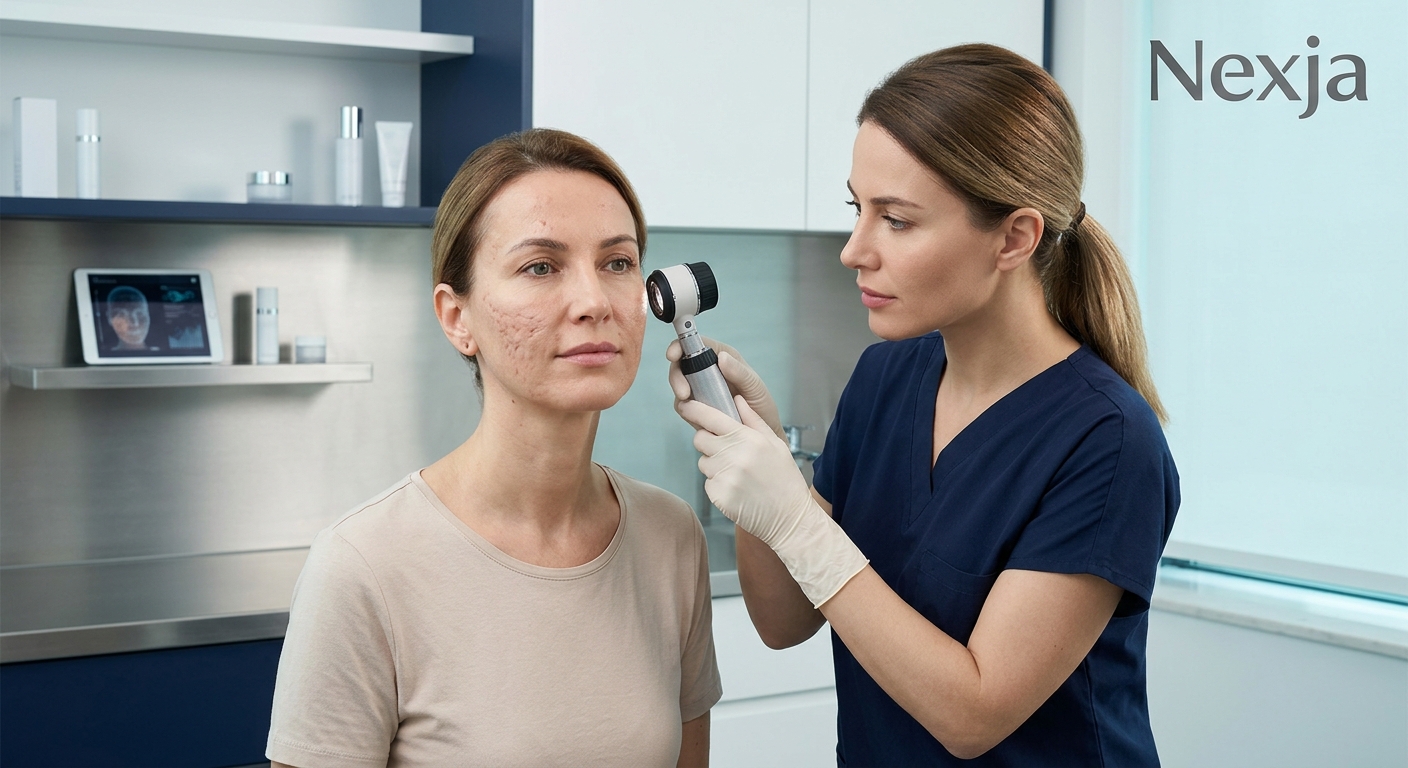
Acne scar treatment cost in Istanbul depends on what needs treating: flat discoloration, shallow texture changes, deep individual scars, tethered depressions or raised scars. A meaningful quote should identify the concern, explain the proposed procedure and show what assessment, treatment, recovery support and review actually include. The cheapest appointment and the best-value treatment plan are not necessarily the same purchase.
There is no responsible single price for every acne scar. A small number of selected scars may need a different approach from widespread cheek texture, and a combination plan may involve different procedures at different stages. Ask for a personalized estimate after assessment, with optional additions separated from the core treatment.
At Beauty Sila Premium in Fatih, start with the current skin care and treatment services and contact the team to discuss your concern and request current pricing. Confirm the exact procedure, who will assess and perform it, and whether a medical consultation or referral is needed. The options explained below are a guide to informed decisions; they are not a claim that every procedure is available at this location.
Quick Answer: What Should an Acne Scar Treatment Quote Include?
A useful quote connects the price to a defined treatment goal. It should tell you:
- Whether the priority is active acne, discoloration, depressed scars, raised scars or a combination.
- Which areas and scar types the proposed treatment addresses.
- The exact procedure, including whether microneedling is conventional or uses radiofrequency.
- What is included in the appointment and what costs extra.
- How the initial treatment stage will be reviewed before further spending.
- What recovery may involve and who will provide follow-up.
- How cancellations, unsuitable treatment decisions and unused package sessions are handled.
Compare the expected course of care, rather than an isolated session price. Keep travel, time away from work and necessary aftercare within your budget. Treat promised scar removal, guaranteed improvement percentages and pressure to purchase immediately as reasons to pause.
Why Acne Scar Prices Vary So Much
You may be comparing different problems
Two people can use the phrase "acne scars" while describing different concerns. One may have flat brown marks after recent breakouts. Another may have longstanding indentations that cast shadows. A third may have thick, raised scars on the shoulders. Those concerns should not receive interchangeable treatment plans.
The American Academy of Dermatology distinguishes depressed and raised acne scars from flat discoloration left after acne. Its descriptions include narrow ice-pick scars, broader boxcar depressions and rolling scars with an uneven appearance. A photograph may help start a conversation, but it does not replace examination. AAD: Acne scar signs and symptoms.
This distinction matters financially. A quote can look attractive while addressing the wrong target. If your concern is cheek contour, ask what the proposed treatment is expected to change in that contour. If your concern is color, ask why a scar-remodeling procedure is being suggested instead of an assessment focused on discoloration.
You do not need to diagnose yourself before making contact. You do need a provider who can explain the difference in understandable language before asking you to commit.
The treatment area needs a clear definition
"Face," "cheeks" and "acne scars" are not precise booking descriptions. Clarify whether a price covers both cheeks, a selected region, the full face or individual scars. If the quoted area changes during assessment, ask how that affects the fee.
For focal procedures, scar number and complexity may matter more than surface area. For broader treatments, the boundaries of the treated region become important. Neither charging structure is automatically better; the relevant question is whether it matches the work proposed.
A person with several deep isolated scars may require more detailed planning than someone with a larger area of mild texture. Area alone therefore cannot explain every price difference.
Ask for the agreed scope in writing. This avoids discovering at the appointment that the forehead, temples or jawline are considered separate areas. It also gives you a consistent basis for comparing two estimates.
A session price does not describe the whole plan
A single visit, a fixed package and a staged combination plan are different financial arrangements. A package may reduce the advertised price per visit, but its value depends on whether those visits remain appropriate after assessment and review.
A staged plan has another advantage: it makes the decision points visible. You can understand what the first stage is intended to achieve, when its response will be assessed and what would justify a further procedure.
Ask whether a suggested number of appointments is an initial estimate, a prepaid commitment or a maximum available within a package. These are different promises. An estimate can change with clinical judgment; a financial commitment has terms that deserve separate attention.
Do not assume that buying more sessions in advance produces a better result. Ask how the plan would change if your skin needs longer recovery, the first approach provides limited benefit or your priorities change.
Training, setting and follow-up contribute to cost
A fee can include more than procedure time. Assessment, consent, appropriate facilities, treatment-specific training, documentation and access to follow-up all require resources.
However, a higher fee does not establish expertise by itself. Ask for the credentials relevant to the exact procedure, not simply the provider’s years in the beauty industry. Someone’s experience with general facials does not answer questions about scar surgery, injectable treatment or an energy-based medical procedure.
Likewise, a sophisticated device name is not a substitute for a suitable indication. The important connection is between your assessed concern, the selected method and the person using it.
Compare providers on what you can verify: a clear explanation, appropriate qualifications, transparent scope, a realistic discussion of limitations and a practical plan for contacting them afterward. Décor and promotional language are much less useful measures.
How to Compare Acne Scar Treatment Costs in Istanbul
Use the following framework when collecting estimates. It helps make quotes comparable without assuming a fixed price or a standard protocol.
| Cost component | What to clarify | Why it changes the comparison |
|---|---|---|
| Initial assessment | Who assesses you, whether there is a fee, and whether it is credited toward treatment | A free booking conversation may not be a full clinical assessment |
| Concern and area | Scar type, region, number of focal scars and any separate discoloration target | Similar treatment names can cover different work |
| Procedure | Exact method and whether it is conventional, energy-based, injectable or surgical | Different procedures have different requirements |
| Appointment inclusions | Preparation, any appropriate pain management, consumables and immediate care | A headline price may omit necessary items |
| Additional products | Product identity, purpose, route of use and whether the addition is optional | An add-on should have a reason beyond its promotional name |
| Course structure | Pay-per-visit, staged treatment or package terms | The lowest session price may require the largest commitment |
| Review and support | Scheduled review, remote contact and arrangements for concerns | Follow-up is part of the decision, especially for visitors |
| Home care | Required products versus optional purchases | Recovery spending should be visible before treatment |
| Travel and time | Additional visits, accommodation and time away from usual activities | The total personal cost can exceed the procedure fee |
Ask for an itemized estimate
An itemized estimate does not have to be complicated. It should separate the assessment, the agreed treatment area, the procedure and optional additions. If several methods are proposed, each stage should have a stated purpose.
For example, "scar treatment package" leaves important questions open. "Initial assessment followed by a proposed first-stage treatment of selected cheek scars, with review before deciding on additional resurfacing" is a clearer description, even before the exact price is supplied.
Ask which elements are essential to the proposed plan and which are optional. If declining an add-on changes the expected benefit, request an explanation of the evidence and the alternative.
Also clarify how long the quote remains valid and in which currency payment will be taken. International visitors should compare the actual payment terms rather than relying on an approximate conversion shown in an advertisement.
Compare like-for-like scenarios
Consider two illustrative offers. One includes a single broad treatment session with no defined review. Another includes assessment, a narrower procedure and a follow-up decision before more treatment is booked.
You cannot decide which is better by dividing the price by minutes or facial area. The second offer may be more appropriate for a particular scar pattern, while the first may be appropriate for another. The assessment is what should connect the offer to the problem.
Now consider a package that bundles several different technologies. Variety alone does not prove value. Ask what each method contributes, whether every step is suitable for you and whether the sequence can be changed.
These examples are purchasing scenarios, not patient results. Their purpose is to show why comparing treatment names without comparing indications can lead to poor decisions.
Keep a separate recovery budget
Recovery costs are often overlooked because they do not appear in the headline treatment fee. Depending on the procedure and individual instructions, your budget may need to include prescribed items, recommended basic skin care, transport, additional accommodation or time away from work.
Do not purchase an extensive collection of products before receiving the actual aftercare instructions. More products do not necessarily mean better care, and some familiar active ingredients may be inappropriate during a particular recovery period.
Ask whether the provider supplies essential aftercare items, recommends products you already own or expects separate purchases. Clarify whether an unplanned review carries a fee.
For visitors, a treatment that appears cheaper can become a more expensive overall trip if it requires a longer stay or repeated travel. For Istanbul residents, repeated time away from work can be just as significant.
Protect flexibility when buying a package
Before prepaying, understand the expiry date, rescheduling terms and policy for medically postponed appointments. Ask what happens if the assessing professional recommends a different procedure after the first stage.
A package should not create pressure to proceed when the skin has not recovered or when the treatment no longer fits the goal. Financial convenience should support clinical judgment.
Check whether the package can be paused, whether unused sessions are refundable and whether transfer to another service is possible. Do not assume any of these options are included.
A practical approach is to separate two decisions: whether you trust the proposed clinical plan, and whether the payment arrangement suits you. A discount answers the second question only partially and does not answer the first.
Scars, Marks and Active Acne: Identify the Actual Target
A useful assessment separates three questions: Is acne still active? Is there a change in color? Is there a change in skin contour? More than one answer may be yes.
DermNet distinguishes post-inflammatory redness from pigmentation and explains that acne scarring can involve different structural patterns. Color changes and contour changes may coexist, so one person’s "scar treatment" can involve more than one target. DermNet: Acne scarring.
| Appearance or concern | What needs clarification | Implication for planning |
|---|---|---|
| Flat brown or darker marks | Whether pigmentation is the main concern | A color-focused assessment may be more relevant than a deep-scar procedure |
| Flat red or pink marks | Whether persistent redness is present | Do not assume every colored mark needs the same treatment |
| Narrow, deep depressions | Whether individual ice-pick scars are present | Ask whether a focal approach is worth discussing |
| Broader depressions with defined edges | Depth and characteristics of boxcar scars | One resurfacing method may not address every depression equally |
| Wavy or undulating texture | Whether rolling scars or tethering contribute | Ask what part of the contour the proposed treatment can address |
| Thick or elevated scars | Whether the scars are hypertrophic or keloidal | Raised scars require a different discussion from depressed scars |
| New inflamed spots alongside old scars | Whether acne control should take priority | Preventing additional scarring may need to come before cosmetic treatment |
These descriptions are conversation starters, not a self-diagnosis guide. Similar-looking concerns can have different explanations, and photographs do not show every feature.
Active acne also changes the sequence. The AAD describes controlling acne before scar treatment so that continuing breakouts do not keep producing new scars. That does not mean you must design a treatment regimen yourself; it means the initial assessment should address ongoing disease as well as existing texture. AAD: Acne scar treatment.
If you are still developing painful or persistent breakouts, make that clear when booking. Buying a scar package without discussing active acne can leave the main source of future damage unresolved.
Treatment Options: What the Price Is Actually Buying
No procedure is the best choice for every acne scar. A useful comparison begins with the problem a method is intended to address, followed by its limitations, recovery and suitability. The following options should be discussed with an appropriately qualified clinician when relevant.
Conventional microneedling
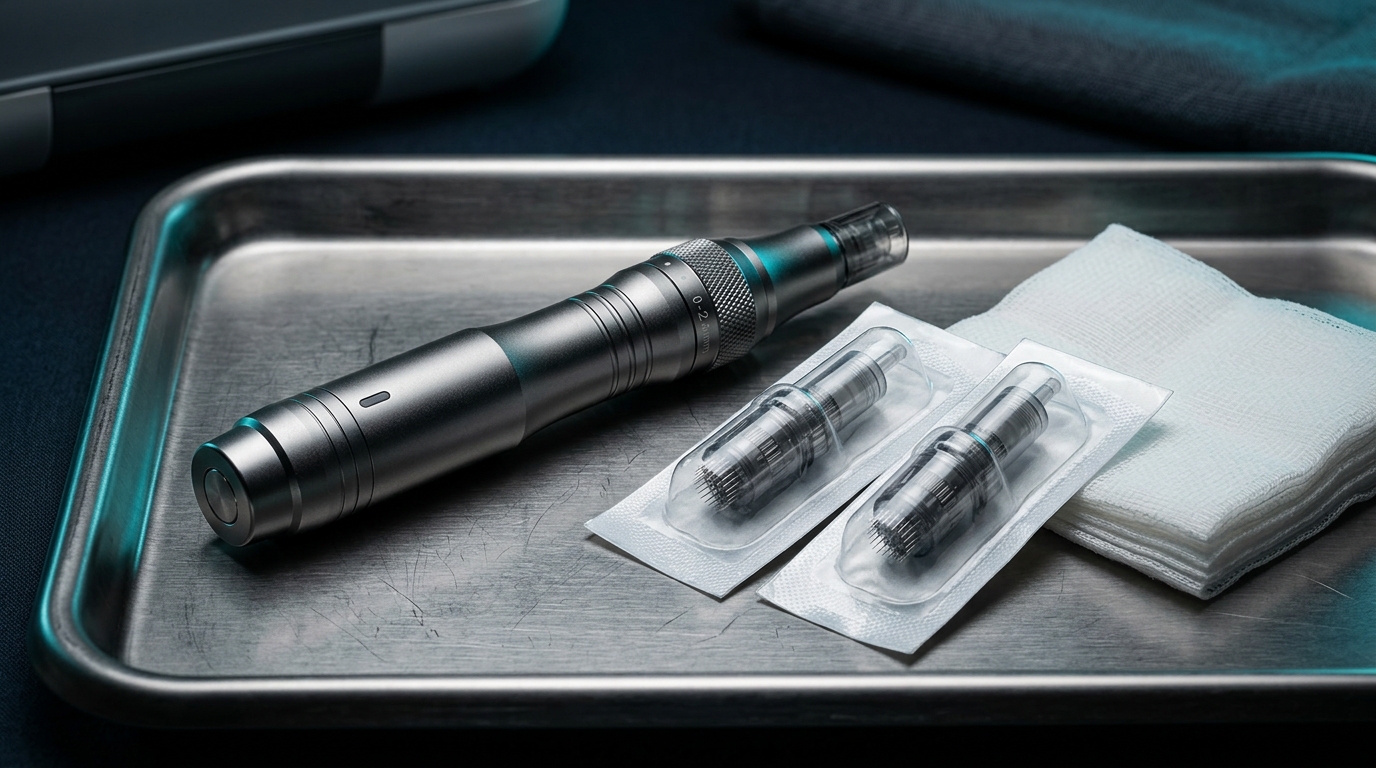
Conventional microneedling uses fine needles to create controlled punctures in the skin and stimulate a repair response. It does not deliver radiofrequency energy. The AAD describes it as an option for acne scars, with changes developing over weeks and fuller results taking longer. Suitability and treatment depth require professional assessment. AAD: Microneedling.
For a quote, clarify the area, exact device, who performs the procedure and what is included before and after needling. "Dermapen" or "microneedling" in a menu does not fully describe an appointment.
Ask what aspects of your scars the proposed course is intended to improve. If several deep individual scars are your main concern, request an explanation of why a broad needling approach is being recommended and what may remain afterward.
A lower price for conventional microneedling cannot be compared directly with a quote for a different procedure simply because both mention collagen. The mechanism, target, equipment and risk discussion need to be clear first.
Radiofrequency microneedling
RF microneedling combines needles with radiofrequency energy that produces heat in tissue. It is distinct from conventional needling. In October 2025, the FDA warned about reported serious complications with certain uses, including burns, scarring, fat loss, disfigurement and nerve damage. The notice describes an ongoing evaluation; it does not provide a universal complication rate. FDA: RF microneedling safety communication.
If RF is proposed, ask why it is appropriate for your scar pattern, which device will be used and what relevant training the operator has. Request a discussion of alternatives and the plan for managing complications.
Do not accept "more advanced" as the entire justification for a higher fee. A technology can be sophisticated without being the appropriate choice for a particular person. Equally, a low RF price does not remove the need for a detailed assessment and consent discussion.
Fractional laser resurfacing
Laser resurfacing includes different categories. Ablative treatment removes tissue; nonablative treatment heats tissue without the same surface removal. "Fractional" describes treatment delivered in separated zones and does not, on its own, identify whether the procedure is ablative. Risks can include infection, pigment changes and scarring, with individual factors affecting suitability. Mayo Clinic: Laser resurfacing.
A quote for "fractional laser" is therefore incomplete without the exact treatment type and device. Fractional CO2 resurfacing should not be treated as interchangeable with every other laser procedure.
Ask what the proposed laser is expected to change in your scars, which concerns it may leave untreated and what recovery will mean for your schedule. Discuss your skin tone, previous pigment changes and past responses to procedures.
Do not choose by intensity alone. A more intensive procedure requires a stronger justification, not an assumption that a more difficult recovery must produce a better personal outcome.
Subcision
Subcision is a medical procedure that releases fibrous bands beneath selected depressed scars. It may be considered when tethering contributes to the appearance, rather than treating every depression as a surface-only problem. Risks include bruising or hematoma, infection, pigment change, additional scarring and injury to nerves or blood vessels. DermNet: Subcision.
Its price may reflect the regions and complexity involved rather than a standard full-face session. Ask which scars are considered suitable and what findings support that choice.
A recommendation for subcision should also explain what it cannot address. Releasing a tethered area does not automatically resolve every surface irregularity or colored mark. If another procedure is proposed afterward, its separate purpose should be understandable.
Do not attempt to determine suitability by copying a demonstration online. Examination and anatomical expertise matter, and the procedure should not be reduced to the idea of simply "breaking up scar tissue."
TCA CROSS and other focal approaches
TCA CROSS is a focused chemical technique used for selected atrophic scars. It is different from applying a general peel over the whole face. DermNet describes risks including pigment changes, prolonged irritation, unsatisfactory response and enlargement or merging of adjacent scars if complications occur. It is a professional procedure, not a home acid treatment. DermNet: TCA CROSS.
When comparing prices, ask whether the quote concerns specific scars or a broader peel. The terms "TCA treatment" and "chemical peel" alone leave too much room for misunderstanding.
The assessment should identify which scars are being targeted and why. A focused treatment may be part of a larger plan, but it should not be automatically added to every package.
Avoid buying strong acids or following application instructions from social media. A product’s availability online does not establish that self-treatment is safe or suitable.
Punch procedures for selected individual scars
For some individual scars, a clinician may discuss a surgical approach. Mayo Clinic describes punch excision as removal of an individual scar followed by repair with stitches or a skin graft. This is a different decision from treating a broad area with a device. Mayo Clinic: Acne scar treatment options.
If such an approach is relevant, clarify the number of scars, the repair method, follow-up requirements and expected trade-offs. Surgery creates a wound that needs an appropriate care plan; the goal should be explained without implying that skin will become scar-free.
A focused surgical estimate may not resemble the price of a routine beauty appointment. Ask for the clinician’s assessment before trying to compare it with a resurfacing package.
Fillers for selected depressed scars
Injectable fillers may be discussed for selected depressions, but product choice, suitability and duration are separate questions. These are medical procedures. The FDA highlights risks including nodules, infection and, rarely, accidental injection into a blood vessel, which can cause tissue death, blindness or stroke. FDA: Dermal fillers.
A filler quote should identify the product, the intended use and the amount proposed after assessment. Ask whether future maintenance may be needed and how this affects the longer-term budget.
Do not assume that an injectable is an easier purchase because the appointment may sound brief. Ask about the injector’s qualifications, emergency arrangements and alternatives. A product being familiar from facial volume treatment does not establish that it is appropriate for your scars.
Raised scars and keloids
Raised scars should not be placed into a depressed-scar package by default. The NHS describes keloids as scars that extend beyond the original injury and notes that treatment can include options such as steroid injections, silicone products or specialist procedures. Recurrence can be an issue, and treatment needs individual assessment. NHS: Keloid scars.
If your main concern is thick or raised scarring, especially with itching or discomfort, seek a medical assessment before booking resurfacing. Mention any previous tendency to form raised scars after injuries or procedures.
The purchasing question changes here: you are asking for a plan suitable for a raised scar, not simply a stronger version of a treatment for indentations.
Are Combination Treatments Worth the Extra Cost?
A combination can be reasonable when different components have different jobs. It becomes harder to justify when a package lists several impressive terms without explaining their roles.
Ask the provider to complete a simple sentence for every proposed step: "This part of the plan addresses this specific feature." If the answer is the same vague promise for every addition, request a clearer explanation.
A useful plan also distinguishes simultaneous treatment from staged treatment. "Combination" does not necessarily mean everything should happen at one appointment. Ask why the suggested sequence is appropriate and what must be reviewed before the next stage.
The financial decision should follow the clinical explanation. Request the price of the core plan and the price of each optional component. That lets you evaluate the addition rather than accepting a bundle as a single indivisible purchase.
Exosomes, serums and other add-ons
An add-on should be identified precisely: product, intended purpose, route of use, evidence and regulatory status relevant to where it is used. A broad label such as "regenerative" does not answer those questions.
The FDA states that there are no FDA-approved exosome products. This is United States regulatory information, not a finding about the legal status of a particular Turkish provider or product. It is a reason to question unsupported approval claims and request specific documentation. FDA: Consumer alert on regenerative medicine products.
The FDA also explains that it has not cleared microneedling devices for use with other products and has not reviewed the safety or effectiveness of such combinations. Device authorization should not be presented as proof that every added serum or product is validated for needling. FDA: Microneedling benefits, risks and safety.
At the booking stage, confirm whether the quoted microneedling appointment includes an additional product and whether an option without it is available. Do not assume that an attractive package name describes a necessary part of scar treatment.
Choosing Between Options Without Chasing a "Best Machine"
A device comparison is useful only after the treatment target is clear. Ask the following questions in order:
- What feature of my scars are we trying to change?
- Why does this method fit that feature?
- What is it unlikely to improve?
- What alternatives are reasonable for me?
- What are the recovery and risk differences?
- What will we review before deciding on more treatment?
This order prevents the equipment list from driving the consultation. It also gives you a clearer way to compare two providers who suggest different approaches.
If their recommendations differ, ask each to explain the reasoning. A disagreement does not automatically mean one is dishonest; scar treatment involves judgment and trade-offs. But neither recommendation should depend on a guarantee or an unexplained sales claim.
It is reasonable to take time to consider the options, request a written summary or seek an independent medical opinion before committing.
What a Useful Scar Assessment Should Establish
A useful consultation should leave you understanding your concern better than when you arrived. You should be able to explain the priority, the proposed first step and the reason for choosing it.
Bring a brief treatment history rather than trying to remember everything during the appointment. Include previous procedures, approximate dates, what improved, what did not and any unwanted reactions. If available, bring earlier treatment records and ordinary photographs taken before procedures.
Describe what bothers you in everyday life. "The shadows on my cheeks in side lighting" is more informative than "I want perfect skin." So is "I am more concerned about the dark marks than the indentations." These statements help align the consultation with your priorities.
Agree on the main goal
Choose one or two priorities before discussing a package. You may want less noticeable texture, a more even-looking complexion or an assessment of several particularly prominent scars.
A provider should help translate that concern into a realistic treatment target. Ask which part of the concern can reasonably be addressed, which part may remain and what uncertainty exists.
This conversation is especially important when you have mixed concerns. If the provider focuses on color while you care most about depth, a technically successful treatment may still disappoint you. Agreement about the target should come before agreement about the payment.
It is also acceptable to decide that treatment is not worthwhile for you at this time. A consultation can be useful even if it ends with observation, acne management or a decision to postpone.
Discuss your medical and treatment history
Give the assessing professional a complete list of medicines, supplements, allergies and relevant health conditions. Mention previous healing problems, cold sores, unusual scarring and significant reactions to skin procedures.
For microneedling, the AAD identifies issues such as poor healing, a tendency to keloids, immune suppression and certain active skin problems as reasons for particular caution or avoiding treatment. The decision depends on the person and procedure. AAD: Microneedling suitability.
Do not stop a prescribed medicine simply to fit a cosmetic appointment. Ask the treating clinician and your prescriber what, if anything, needs adjusting. A medication list is information for assessment, not a reason to make changes independently.
If you have used isotretinoin, provide the dates and dose information you have. Ask for advice specific to the proposed procedure rather than applying an internet waiting period to every treatment.
Skin tone deserves an individual discussion
Skin tone should be part of the assessment, together with your history of pigment changes after acne, irritation or previous procedures. Ask how those factors affect method selection and recovery planning.
Avoid both extremes: a claim that every procedure is equally suitable for everyone, and a blanket claim that a particular skin tone cannot receive scar treatment. The useful question is which options are appropriate for you and why.
For laser resurfacing, Mayo Clinic specifically discusses pigment-related risks and individual suitability. A consultation should make these issues understandable without promising that a device or setting eliminates all risk. Mayo Clinic: Laser resurfacing considerations.
Ask whether the provider has relevant experience with similar skin concerns and how they document and respond to unwanted pigmentation. Do not treat a social-media photograph as the complete answer.
Photographs should support a fair review
Ask how baseline photographs will be taken and used. Similar lighting, camera position, distance and facial expression make a comparison more meaningful than a dramatic "before" photograph paired with flattering "after" lighting.
Clarify consent for clinical records separately from consent for marketing. You should understand whether photographs will remain private, whether they may be shared and how to decline promotional use.
If you are comparing examples, look for the same angles and realistic skin texture. Ask how long after treatment the images were taken and whether several procedures were involved.
Photographs can support a discussion, but they should not replace your own priorities. A small visible change can matter to one person and feel insufficient to another. Decide what you hope to notice in ordinary life, not only in magnified images.
Who May Need to Delay Treatment or Choose Another Route?
Some people need medical assessment, a different treatment sequence or postponement. The concern is not whether you fit a marketing category, but whether the proposed procedure is appropriate now.
Raise these issues before booking a treatment slot:
- Ongoing inflamed acne, a suspected infection or a new skin problem.
- A history of difficult healing or raised scars.
- Recent tanning, sunburn or a procedure that has not fully settled.
- Pregnancy, breastfeeding or a relevant change in health.
- Current medicines that may affect the assessment.
- An upcoming event or trip that leaves little recovery flexibility.
- An inability to access the recommended follow-up.
- Expectations that depend on complete removal or a guaranteed result.
These are prompts for professional assessment, not a universal list of permanent exclusions. For example, pregnancy-related advice depends on the treatment and associated medicines, while recent irritation may simply change the timing. The correct next step is disclosure and an individualized decision.
Practical suitability matters too. If you cannot follow the aftercare plan because of work, travel or caregiving responsibilities, say so. A plan that only works on paper is not a good fit.

What Happens Before, During and After an Appointment?
The details depend on the selected procedure, but the decision process should remain clear.
Before treatment begins
Confirm that the planned procedure matches the one you discussed. Review the area, expected benefit, important limitations, alternatives and possible complications. Ask any remaining questions before consent.
If the plan changes on the day, request an explanation and an updated price before proceeding. A change may be reasonable, but it should not happen through an unexplained substitution.
Clarify preparation and pain-management arrangements in advance. Do not assume that numbing, medication or a particular product is automatically included because another provider includes it.
For microneedling, the FDA emphasizes appropriate training and a new cartridge for each treatment session, including repeat sessions for the same person. Hygiene should be part of the procedure standard, not an optional upgrade. FDA: Microneedling safety.
During the procedure
The agreed method should be used within the treating professional’s scope and your consent. You should know how to communicate discomfort or ask for a pause.
Avoid judging treatment quality by visible redness, bleeding, the number of passes or how intense it feels. These are not consumer measures of success. Ask the professional what their intended endpoint means for your particular procedure.
If a new product or additional treatment is suggested during the appointment, it should have a clear purpose and require your agreement. You do not have to accept an unplanned addition because treatment has already started.
Before you leave
Receive written instructions that match the actual procedure performed. They should cover cleansing, permitted products, activity restrictions, expected changes, warning signs and contact arrangements.
Know when the planned review will occur and whether it is in person or remote. Ask who will respond if you have a concern outside ordinary opening hours.
International visitors should also ask what documentation they can take home. An accurate treatment record is more useful to a future clinician than a receipt that says only "skin package."
Benefits, Limitations and What Improvement Really Means
A realistic goal is to make scars less noticeable, not to promise skin without texture. The AAD explains that acne scars arise from changes in collagen during healing and that established scars generally do not simply disappear. AAD: Why acne scars develop.
Possible goals should be expressed specifically: less prominent contour irregularity, improvement in selected scars or a more even appearance when discoloration is also being addressed. The expected benefit depends on the assessed problem and method.
Ask what a modest response would look like, not only what a very good response might look like. This makes the financial decision more realistic. If only a dramatic outcome would justify the expense for you, discuss that before treatment.
Do not purchase an improvement percentage
A percentage sounds precise, but it can conceal different measurements. Does it describe a clinician’s score, patient satisfaction, a photograph assessment or a marketing estimate? Was it measured after one procedure or several?
Ask what supports the figure and whether it applies to people with similar scars and skin characteristics. A result from a study or a selected example is not a personal guarantee.
It is more useful to agree on a review method and treatment goal than to purchase a number. Ask how the provider will judge whether further treatment is worthwhile.
Separate healing from result assessment
The point when you feel comfortable returning to ordinary activities is not necessarily the point when the final effect can be assessed. A plan should distinguish immediate recovery, the first review and later evaluation.
Ask when photographs will be compared and when another intervention would be considered. Booking a review is different from automatically booking the next procedure.
Keep notes about what you notice, but avoid making a daily verdict under changing lighting. Bring concerns to the provider and use the agreed review process.
Build a stopping point into the plan
Before starting, discuss what would lead you to continue, change approach or stop. This is especially useful when you have already spent money on treatments that did not meet your expectations.
A reasonable stopping point might involve reaching a personally acceptable improvement, deciding that further benefit is uncertain or concluding that recovery demands outweigh the value to you. These are decisions to discuss, not signs of failure.
A provider should be willing to review limited progress without immediately selling a larger package. The next recommendation should explain what has been learned from the previous stage.
How Many Sessions Should You Budget For?
There is no reliable universal number of acne scar sessions. The number depends on the assessed scars, method, response and treatment goal. A full plan may include assessment, a procedure, recovery reviews and later decisions about additional treatment; not every appointment is another treatment session.
Ask for an initial course estimate with uncertainty clearly stated. The provider should distinguish what is being recommended now from what might be considered later.
A useful estimate answers three questions: What is the first stage? When will its effect be assessed? What would make another stage worthwhile? This is more informative than being told that everybody needs the same package.
For a mixed-scar plan, also ask whether different procedures are intended for different regions or different phases. Count each component separately when considering time and cost. A "three-step plan" does not necessarily mean three identical appointments.
Why a short trip should not dictate the interval
If you are visiting Istanbul, do not arrange several procedures close together solely to fit your flights. The interval should follow the selected treatment and clinical assessment.
Before travel, ask which parts of the plan can realistically be completed during the visit. You may be able to complete an assessment and one suitable stage while leaving later decisions for a review. You may also learn that the visit is better used for consultation only.
For residents and expats, a flexible calendar can make staged care easier, but convenience still should not determine treatment intensity. Tell the provider about work deadlines, travel and important events before dates are agreed.
What if previous treatment did not help?
Bring records of the method, dates and any known settings or products, if available. Explain what you expected, what you noticed and how long you waited before judging the outcome.
A new consultation should consider why the previous approach may not have met the goal. The answer should be more specific than "you need more sessions." It might involve reassessing the target, reviewing the treatment history or considering a different approach.
Do not purchase an aggressive escalation simply because you are frustrated. Ask what new information supports the new plan and what would change if its benefit were also limited.
Preparing for Acne Scar Treatment
Preparation is procedure-specific. Obtain written instructions from the treating professional and use them to plan the days before the appointment.
Give accurate information about recent sun exposure, skin irritation and other procedures. Ask whether any planned waxing, shaving, exfoliation or active skin-care ingredients need to be adjusted. Do not apply one procedure’s preparation instructions to another.
For laser resurfacing, medical history, medicines, cold sores and other risk factors can affect preparation. The treating clinician may recommend specific measures; these should be individualized rather than copied from someone else’s prescription. Mayo Clinic: Preparing for laser resurfacing.
Practical preparation also helps:
- Keep the agreed appointment and aftercare instructions accessible.
- Confirm whether you need someone to accompany you or transport arrangements.
- Set aside the products specifically recommended for your recovery.
- Move optional social commitments if the expected recovery conflicts with them.
- Make sure you know the provider’s contact and review arrangements.
- Report a new rash, illness, breakout or medication change before treatment.
Arrive with questions resolved wherever possible. Consent is easier to consider thoughtfully before you are already prepared for a procedure.
Recovery and Aftercare: Match the Advice to the Procedure
"Acne scar treatment downtime" is not one number. Ask separately about visible changes, wound healing, makeup, exercise, work and sun exposure. A person who works remotely may have different practical needs from someone working outdoors or appearing on camera.
Conventional microneedling recovery
The AAD describes temporary redness or darker coloration, discomfort and swelling after microneedling, often settling over days. It advises waiting at least 24 hours before makeup. Your treating professional may give different or longer restrictions depending on what was performed and how your skin responds. AAD: Microneedling recovery.
Do not interpret a general recovery estimate as permission to resume every product or activity. Ask for the restart plan for your own routine, particularly if you normally use exfoliating acids, retinoids or several active products.
Fractional CO2 recovery
Memorial Sloan Kettering’s patient guidance describes skin healing after fractional CO2 treatment as commonly taking one to two weeks. It advises avoiding makeup until healing is complete and temporarily avoiding activities such as swimming, hot baths and saunas. Individual instructions take priority, and healing does not mean all redness or longer-term changes have finished. MSK: Care after fractional CO2 laser treatment.
Plan this kind of recovery before booking an event or sightseeing schedule. Ask what cleansing and wound care are required and when your clinician expects to review the treated skin.
Chemical procedures and focal scar treatment
Recovery from a peel depends on its depth and type. The AAD distinguishes superficial, medium and deep peels, with different healing and aftercare requirements. A familiar word such as "peel" should not be taken to mean a light cosmetic exfoliation. AAD: Chemical peel questions.
For a focal treatment, ask how each treated spot should be cared for and when products can be used around it. Do not pick at treated areas or try to accelerate the process with additional acids.
Sun protection and skin-care products
The AAD recommends following the treatment-specific care instructions and protecting skin from the sun after acne scar treatment. Its guidance includes broad-spectrum, water-resistant SPF 30 or higher sunscreen. The timing and products appropriate for freshly treated or healing skin should be confirmed with the clinician. AAD: Acne scar treatment self-care.
Ask for a simple routine with clear restart points. A long list of optional products can make recovery harder to follow and more expensive without clarifying what is necessary.
Keep a written distinction between "use now," "restart after approval" and "avoid for this recovery." This is particularly helpful if your regular routine includes prescription treatment for acne.
When to seek help
Ask in advance what changes are expected and which require a prompt call. After fractional CO2 treatment, MSK advises contacting the care team for concerns such as fever, increasing pain, worsening redness or swelling, abnormal drainage or persistent bleeding. Do not wait for the routine review if your symptoms are worsening. MSK: When to contact your care team.
After filler injection, unusual pain, skin blanching or vision changes require urgent medical attention because vascular complications can be serious. FDA: Filler safety information.
A messaging service is useful for routine questions, but it should not delay urgent assessment. Before treatment, know the local emergency route and what to do if you cannot reach the provider.

Planning Treatment Around Istanbul Life and Travel
Beauty Sila Premium’s contact address is on Fevzi Pasa Caddesi in Aksemsettin, Fatih. Use the current contact page for location details and appointment arrangements.
Whether you live in Istanbul, are an expat or are visiting from abroad, organize treatment around the actual recovery plan. A central location does not remove the need for rest, appropriate care or follow-up.
Sightseeing, sun and hammam visits
Tell the provider if your itinerary includes long outdoor walks, a Bosphorus outing, visits around Sultanahmet or a hammam. These plans may conflict with procedure-specific instructions about sun, heat, water or friction.
A hammam combines several exposures, so ask about the whole activity rather than treating it as an ordinary shower. Do not assume that feeling comfortable means every restriction has ended.
Leave flexibility in your itinerary. You should be able to change optional activities if the clinician advises a longer recovery or if your skin does not settle as expected.
Work, exercise and social events
Describe your real working environment. Outdoor work, a hot workspace, protective equipment against the face or long public-facing shifts can present different practical challenges.
Ask when your actual activities can resume, rather than asking only "When can I return to normal?" Give examples: a gym class, swimming, a long commute, filming content or wearing stage makeup.
For weddings and other important events, work backward from the date with the provider. Avoid making a result-dependent commitment when recovery and response remain uncertain. An assessment well before the event gives you more room to decide whether treatment is sensible.
Flights and follow-up after leaving Turkey
There is no single flight interval that applies to every acne scar procedure. Ask your clinician whether your planned departure allows appropriate review and whether the journey creates practical problems for the required care.
Before leaving, obtain a record of the procedure, relevant product or device details and the aftercare plan. Know how to contact the provider and what remote review can realistically cover.
If you may continue treatment in another country, ask what information a future clinician will need. A local clinician must make their own assessment; they should not be expected to repeat a procedure simply because it was included in an overseas package.
Choosing a Provider: Questions That Reveal the Quality of the Plan
Good questions should produce clear explanations rather than slogans. Use these during consultation:
| Question | What a useful answer should clarify |
|---|---|
| What exactly are you treating? | The distinction between acne, marks and scar structure |
| Why this procedure for me? | The connection between assessment and method |
| What may not improve? | Limits relevant to your own concern |
| Who will perform it? | Identity, appropriate qualifications and relevant experience |
| What is included? | Procedure scope, products, preparation and review |
| What are my alternatives? | Other reasonable approaches, including postponement |
| What happens if I have a complication? | A practical assessment and escalation pathway |
| When will we judge the response? | Review timing and a meaningful comparison method |
| What would change the plan? | How limited response or recovery issues are handled |
| Can I have time to decide? | Whether consent is informed and free from pressure |
For Beauty Sila Premium, the Nexja Select idea is most relevant as a selection principle: the product or technology should earn its place through a clear purpose in the individual plan. Ask how that purpose is explained for the service you are considering. A brand concept should support the discussion, not replace evidence or the qualifications required for a procedure.
Similarly, treatment-specific staff education matters more than a generic claim of experience. Ask about preparation for the particular service, and distinguish a beauty-service consultation from the medical assessment required for medical or surgical scar procedures.
Red Flags Before You Pay
Pause if a provider guarantees complete scar removal, promises the same result to everyone or recommends a package without discussing your history.
Other concerns include refusing to identify the procedure or product, presenting every add-on as essential, dismissing risks, using inconsistent before-and-after photographs or failing to explain follow-up.
Be cautious about a claim that a treatment is risk-free because it is "natural," "non-surgical" or "the latest technology." These labels do not answer the questions that matter.
A pressured deadline is also worth questioning. Ask whether you can receive the estimate and consent information in writing and take time to consider them. A suitable treatment plan should remain understandable after the sales conversation ends.
Acne Scar Treatment Myths and Facts
Myth: The most expensive treatment must be the best.
Price does not establish suitability. Compare the assessed target, proposed method, qualifications, recovery and follow-up.
Myth: Every mark left by acne is a permanent scar.
Flat discoloration and structural scars are different concerns. They may coexist, which is why the initial assessment matters. AAD: Acne scar symptoms.
Myth: More technologies in one package always mean better value.
Every component needs a purpose. A long equipment list is not an individualized plan.
Myth: RF microneedling is simply ordinary microneedling with a premium name.
RF adds energy and heat. Its risk discussion must reflect that distinction, including the FDA’s safety communication. FDA: RF microneedling notice.
Myth: A result photograph predicts my result.
A photograph shows a particular example under particular conditions. Ask about the treatment history, timing and relevance to your own scars.
Myth: If one session disappoints, a larger package is automatically the answer.
Limited progress should prompt review of the goal and approach before another purchase.
Frequently Asked Questions
1. How much does acne scar treatment cost in Istanbul?
The cost depends on the assessed concern, procedure, area, course structure and follow-up. Request a current personalized estimate rather than relying on a citywide headline figure. Ask for the first-stage cost, likely additional stages and optional items separately. For Beauty Sila Premium, use the contact page to confirm current services and pricing after discussing your needs.
2. Why do two clinics quote very different prices for acne scars?
They may be quoting different procedures, areas, products or levels of follow-up. One may price a single session while another includes a course. Ask each provider to define the same concern and treatment area, then compare the proposed method and inclusions. A price difference becomes meaningful only after you understand what each offer actually covers and why it has been recommended.
3. Can I receive an exact quote from photographs?
Photographs can help with an initial discussion, but an estimate may remain provisional until assessment. Images do not provide the full history or every feature visible during examination. Ask what could change the quoted fee and whether an assessment charge applies. If you are traveling, clarify the cancellation or deposit terms in case the final recommendation differs from the initial conversation.
4. Is treatment charged per scar, per area or per session?
Any of these structures may be used, depending on the procedure and provider. Focal work may be described by selected scars, while broader treatment may be described by region or visit. Request a written definition of the scope, including whether both cheeks are included. The charging format matters less than whether it accurately describes the work being proposed.
5. Is a full-face package better value than treating only my cheeks?
Only if treating the additional area has a clear purpose for you. A larger area is not automatically a better purchase. Ask which concerns outside the cheeks would be addressed and whether they warrant treatment. If your priority is a limited region, compare an appropriately focused plan before deciding that a full-face offer represents a saving.
6. Should I buy a package before my first consultation?
It is generally more sensible to understand the proposed plan before making a substantial commitment. Ask about assessment first, then review package terms once suitability and scope are clear. Pay particular attention to expiry, postponement, unused sessions and changes in recommendation. A discount is useful only when the care included remains appropriate and the financial terms suit your circumstances.
7. How can I tell whether I have scars or dark marks?
Flat color changes and depressions or raised areas need different assessment. Look at what concerns you, but avoid diagnosing the problem from a mirror or photograph alone. Describe both color and contour when booking. The AAD explains that flat post-acne discoloration is often different from an acne scar; a professional can clarify whether both are present. AAD: Scar symptoms.
8. Can I treat scars while I still have acne?
Ongoing acne needs to be addressed in the plan. The AAD recommends controlling acne before proceeding with scar treatment to reduce the creation of further scars. Tell the assessing professional about current breakouts and acne medicines. The appropriate sequence may involve acne management first, followed by reconsideration of the remaining marks and scars. AAD: Scar treatment.
9. Is microneedling or fractional CO2 laser better?
Neither is automatically better for every person. Ask which option fits your scar pattern, skin history and recovery constraints, and why. The comparison should include expected benefit, important risks and what each method may leave untreated. A recommendation based only on a machine’s popularity or a discounted price is incomplete. Confirm the exact laser type and whether the needling option uses RF.
10. Is conventional microneedling the same as RF microneedling?
No. Conventional microneedling uses needles; RF microneedling also delivers radiofrequency energy. Confirm the distinction before comparing quotes or consenting. Ask for the exact device and the risk discussion relevant to it. The FDA’s RF notice reports serious complications with certain uses, so a generic description of "needling" is insufficient. FDA: RF microneedling safety.
11. Can subcision help every depressed scar?
No. Subcision is intended for selected scars where releasing underlying fibrous bands is appropriate. It should not be assumed to suit every pit or depression. Ask which scars have been selected and how the clinician reached that decision. A mixed pattern may require separate consideration of other features. DermNet: Subcision indications.
12. Is TCA CROSS just a stronger facial peel?
No. TCA CROSS is a focal technique directed at selected scars, rather than a general full-face peel. That difference affects assessment, application and recovery. Ask which scars would be treated and what risks apply, including pigment change and scar widening. Do not attempt to reproduce the procedure with an acid purchased for home use. DermNet: TCA CROSS.
13. Can fillers improve acne scars?
Fillers may be considered for selected depressed scars, but they are not appropriate for every pattern. Ask about the exact product, intended benefit, duration, risks and possible future maintenance. The consultation should include the qualifications of the injector and emergency arrangements. Do not compare this option with a beauty treatment solely by appointment length or immediate price. FDA: Dermal fillers.
14. Do raised acne scars need the same treatment as pits?
No. Raised scars require a different assessment from depressed scars. If scars are thick, growing, itchy or uncomfortable, discuss medical evaluation before purchasing a resurfacing package. Mention previous keloids or raised scars elsewhere on your body. The NHS describes several specialist options for keloids and notes that treatment decisions need to consider recurrence. NHS: Keloid scars.
15. Can old acne scars still be assessed for treatment?
Yes. Longstanding scars can still be assessed; age alone does not select a treatment or predict the outcome. Bring your treatment history and explain the features that concern you now. Ask what improvement is realistic and what may remain. Be wary of a guarantee that a particular procedure can erase all old scars. Mayo Clinic: Acne scar options.
16. Can acne scars be completely removed?
Complete removal should not be promised. A more realistic discussion concerns improvement in appearance, with limits that depend on the scar and treatment. Ask the provider to describe both a reasonable goal and a limited-response scenario. If your decision depends on perfectly smooth skin, explain that before proceeding so expectations can be addressed. AAD: Understanding acne scars.
17. How many sessions will I need?
You need an individualized estimate, not a universal number. Ask which appointments are treatments, which are reviews and when the initial response will be assessed. If several methods are proposed, request the purpose and likely timing of each stage. A package count is a payment arrangement; it should not be presented as proof that the same number is appropriate for everyone.
18. When should I decide whether treatment worked?
Agree on a review point with the treating professional before treatment starts. Early healing and later outcome assessment are different stages. Ask when a comparison is meaningful for the selected procedure and what records will be used. If you are worried before that date, contact the provider rather than treating the planned review as a reason to ignore concerns.
19. What if I have darker skin or easily develop dark marks?
Tell the provider about your skin history, including pigmentation after acne or previous procedures. Ask how this affects selection, preparation and follow-up. Avoid accepting a blanket claim that every option carries the same risk for every skin tone. Laser resurfacing, in particular, requires an individualized discussion of pigment changes and other complications. Mayo Clinic: Laser resurfacing risks.
20. Does an exosome add-on guarantee a better result?
No guarantee should be accepted. Ask for the exact product, route of use, evidence and applicable regulatory status, and whether the core procedure is available without the addition. The FDA states that no exosome products are FDA-approved; this US statement should not be misrepresented as a determination about a specific Turkish service. FDA: Exosome consumer information.
21. Can skin analysis software choose the right scar treatment?
Software should not be treated as a substitute for professional assessment or a medical diagnosis. If digital analysis is offered, ask what it measures, what its limitations are and who interprets the information. A visual report can be part of a conversation, but the treatment recommendation should still be explained through your history, assessed concern, suitability and goals.
22. Should I stop my acne medication before treatment?
Do not change prescribed medication on your own. Give the treating clinician a complete list and ask whether the proposed procedure requires coordination with your prescriber. Include oral medicines, topical prescriptions and recent isotretinoin use. Obtain instructions specific to your situation, including when a product may be restarted, instead of applying a generic online schedule to every acne scar treatment.
23. How long will I need off work?
That depends on the procedure, your recovery and what your work involves. Ask separately about visible changes, wound care and practical restrictions. Explain whether you work outdoors, in heat, on camera or in a setting where something presses against the treated skin. The answer should relate to those activities, not simply a broad label such as "minimal downtime."
24. When can I wear makeup again?
Follow the instructions for the procedure actually performed. The AAD advises at least 24 hours after microneedling, while fractional CO2 guidance requires waiting until healing is complete. These are different recovery situations. Ask for your specific restart point, especially if the skin remains irritated or unhealed. AAD: Microneedling, MSK: CO2 aftercare.
25. Can I exercise, swim or visit a hammam afterward?
Do not assume those activities share the same restart date. Ask about each one before treatment, including heat, water exposure and friction during a hammam visit. For fractional CO2, MSK’s guidance includes temporary restrictions on swimming, saunas and hot baths. Your clinician should provide the schedule appropriate to your procedure and recovery. MSK: Fractional CO2 care.
26. Can I combine acne scar treatment with an Istanbul holiday?
Possibly, but the itinerary should fit the care plan. Discuss outdoor sightseeing, hammam visits, flights and social events before booking treatment. Leave room for review and changes in recovery. If the trip is short or tightly scheduled, an assessment-only visit may be the more practical choice. Do not compress a proposed course simply to fit the days available.
27. How soon can I fly home?
Ask the treating clinician for advice specific to the procedure, recovery and follow-up requirements. There is no single departure rule for every scar treatment. Give your flight date before paying and ask whether an in-person review is needed first. Make sure you can access the recommended care after leaving and know what to do if a concern develops during travel.
28. What if I have a problem after leaving Turkey?
Use the agreed contact route promptly and seek local medical assessment when needed. Do not rely on remote messages for an urgent problem. Before departure, obtain your treatment record, aftercare instructions and details of follow-up responsibilities. Ask what the original provider can realistically assess remotely and how information can be shared with a clinician in your home country.
29. Should I switch providers if I am not seeing improvement?
First request a review of the treatment goal, timeline and response. If the explanation is unclear or you are considering a major change, an independent medical opinion may help. Bring previous records so the new assessment is informed. Avoid purchasing another package based only on frustration or a promise that a different machine will solve everything.
30. What should I send when asking Beauty Sila Premium for an appointment?
Describe the main concern, affected area, ongoing acne, previous procedures and any important timing constraints. Ask whether the next step is a consultation, a beauty-service assessment or medical evaluation. Confirm current service availability and request pricing tied to the proposed scope. Share sensitive health information only through a contact method you are comfortable using and avoid treating an initial booking exchange as a diagnosis.
Make the First Decision About the Plan, Then the Price
The most useful acne scar treatment quote is one you can understand. It identifies the concern, connects it to a suitable method, explains limitations and shows the full commitment in money, recovery and follow-up.
Before paying, make sure you can answer four questions in your own words: What are we treating? Why this approach? What might remain? How will we decide what comes next? If those answers are missing, another conversation is more valuable than a larger package.
For Istanbul residents, expats and international visitors, Beauty Sila Premium’s skin care and treatment page is the starting point for current services. Contact Beauty Sila Premium in Fatih to explain your concern, confirm the appropriate assessment and request a personalized estimate.
Choose a plan that fits your skin, your expectations and your ability to complete the recommended care. Clear selection, realistic goals and accessible follow-up are the foundation of an informed decision.