

Facial laser hair removal in Istanbul can provide longer-lasting reduction for managing unwanted hair on the upper lip, chin, cheeks, and jawline. The procedure utilizes concentrated light beams to target melanin in hair follicles, disrupting their growth cycle through a process known as selective photothermolysis. In this process, the laser emits a specific wavelength of light that is absorbed primarily by the dark pigment in the hair root, converting that light energy into heat. This localized heat damages the follicle structure, severely inhibiting its ability to produce new hair in the future. Costs in Istanbul vary based on the specific areas treated, the number of required sessions, and the type of laser technology employed, rather than a fixed flat rate. Suitability depends heavily on the contrast between your skin tone and hair color; the most effective results typically occur when dark hair is treated on lighter skin, though modern advancements have made it safer for a broader range of skin types.
Location or marketing alone cannot establish a provider’s competence. When comparing clinics in Fatih or elsewhere in Istanbul, ask who assesses suitability, who operates the device and what experience they have with your skin tone. Confirm that follow-up is available if a reaction occurs. Request the exact device name and the areas included in your quote. Coarse chin hair and fine cheek hair should not automatically receive the same treatment plan.
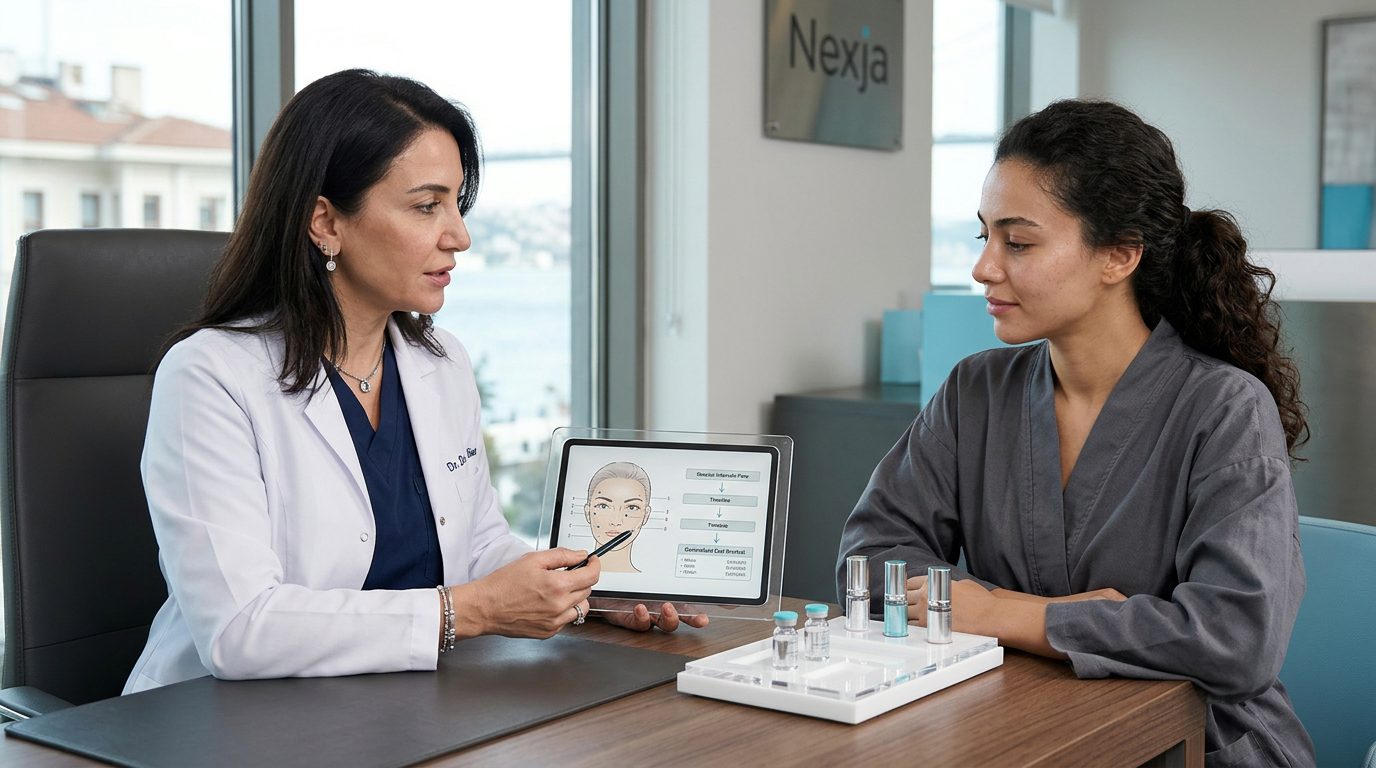
Achieving optimal results requires understanding your specific hair type, preparing the skin correctly, and committing to a customized session plan. Because facial hair growth is often hormonally driven, meaningful reduction usually takes multiple sessions spaced several weeks apart. An individual clinical assessment is needed to determine suitability; an imaging or AI score cannot replace it. During this consultation, a technician will map out the facial zones requiring treatment, discuss your underlying health history, and explain the trade-offs between laser hair removal and traditional methods like threading or waxing. While traditional methods offer immediate, temporary removal by physically pulling the hair from the root, they often cause micro-tears in the skin and lead to ingrown hairs. Laser treatment requires a longer-term commitment and initial financial investment but provides a reduction in hair density and thickness that traditional methods simply cannot achieve.
Quick Answer: Cost Factors in Istanbul
While exact pricing fluctuates based on individual needs and clinic protocols, understanding the factors that influence the cost of facial laser hair removal helps you budget appropriately. Clinics evaluate several variables before providing a comprehensive package. When comparing options, it is vital to look beyond the initial price tag and understand what is included in the service. Price alone cannot establish device quality or predict the number of visits. Compare written quotes covering the same areas, reviews and follow-up arrangements.
Consider a worked example of how a clinic might structure its pricing. Option A might involve purchasing individual sessions for just the upper lip on a pay-as-you-go basis. Option B might be a comprehensive lower-face package covering the upper lip, chin, and jawline, purchased upfront as a block of 8 sessions. While Option B represents a larger upfront financial commitment, the per-session cost for the combined areas is significantly lower than paying for each zone and visit individually. This illustrates the trade-off between immediate cash flow and long-term overall value.
Treatment Area Size
Targeting just the upper lip requires less time and resources than a full face and neck treatment, directly impacting the per-session cost. Clinics usually map the face into distinct zones, and adding more zones incrementally increases the time the technician spends operating the device.
Technology Used
Equipment and operating costs may affect a quote, but a higher price or newer device does not by itself establish safety or effectiveness. Ask which system is proposed and how its settings, cooling and eye protection suit your treatment area.
Number of Sessions
Facial hair often requires more frequent maintenance than body hair. Purchasing a multi-session package is generally more cost-effective than paying per visit, as clinics reward the commitment with bundled savings.
Hair Types, Skin Tones, and Suitability
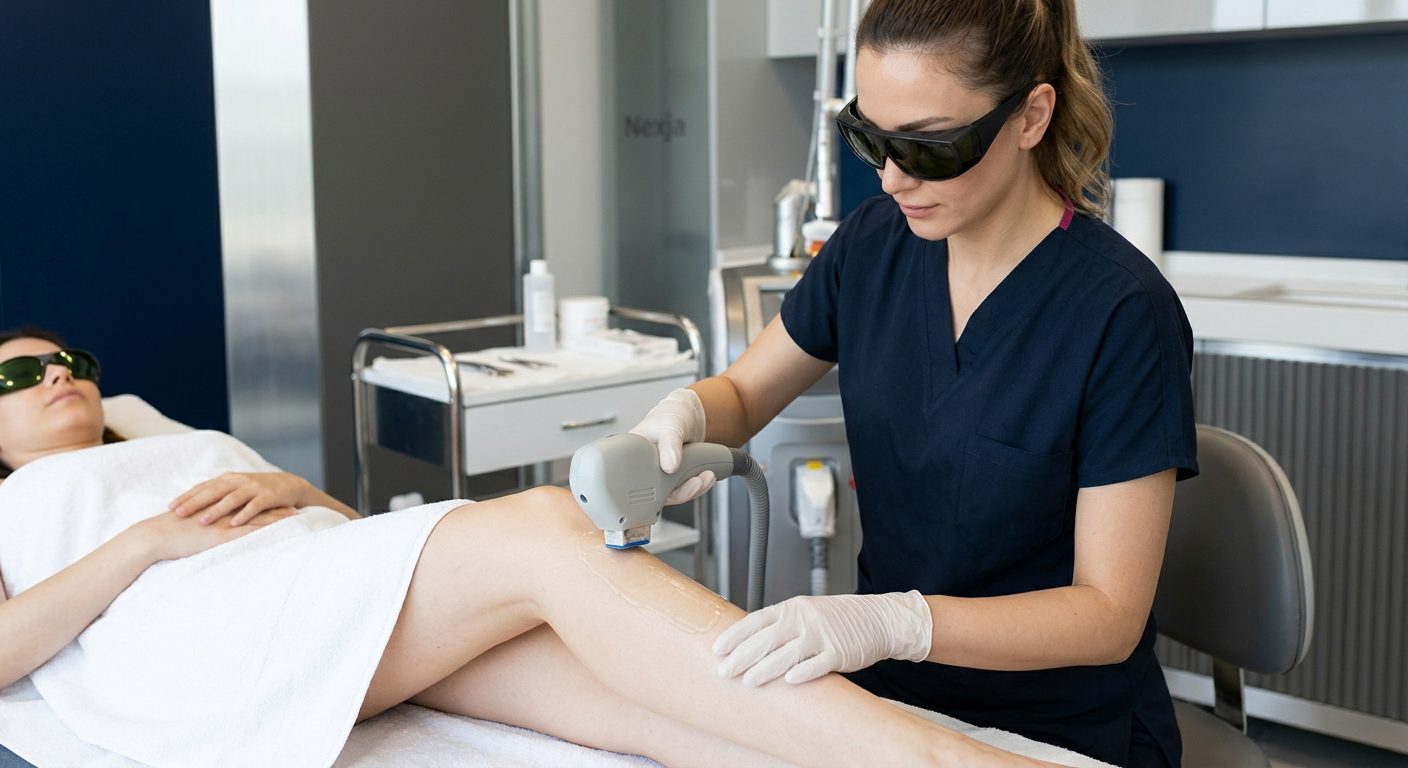
Not all facial hair responds equally to laser treatment. The fundamental mechanism of laser hair removal relies on targeting the pigment (melanin) within the hair follicle. According to guidelines provided by the American Academy of Dermatology (AAD), lasers are most effective when there is a clear contrast between the hair color and the surrounding skin. This contrast helps target pigment in the hair, but pigment in the skin can also absorb energy; burns and pigment changes remain possible. Without this contrast, the laser may struggle to differentiate between the skin and the hair, which can lead to inefficient treatments or superficial skin burns.
Skin tone, recent tanning and the diameter and pigment of each hair influence the choice of device and settings. Darker skin can be treated by an experienced practitioner using suitable equipment, but a longer wavelength does not eliminate the risk of burns or pigment changes. Ask why the proposed system is appropriate for your skin and hair rather than assuming that a device name guarantees safety or effectiveness on fine hair.
Ask the provider to identify the actual device and explain its suitability for the proposed treatment area. Fine facial hair or hair with little pigment may respond poorly, so discuss alternatives during the consultation. Paradoxical hypertrichosis means increased hair growth after treatment and is a possible adverse effect, particularly relevant when assessing facial hair. Its risk should be explained before proceeding; a device name or adjustable settings do not establish that treatment is appropriate.
To self-evaluate your suitability before booking an appointment, examine your facial hair in natural daylight using a magnifying mirror. Dark coarse hairs may respond, but appearance alone cannot establish suitability; skin characteristics, history and the treatment area must also be assessed. If the hair is mostly translucent, exceptionally soft, or blends seamlessly with your skin tone without any dark shadowing, laser technology may struggle to find a viable target.
Preparation and the Assessment Process
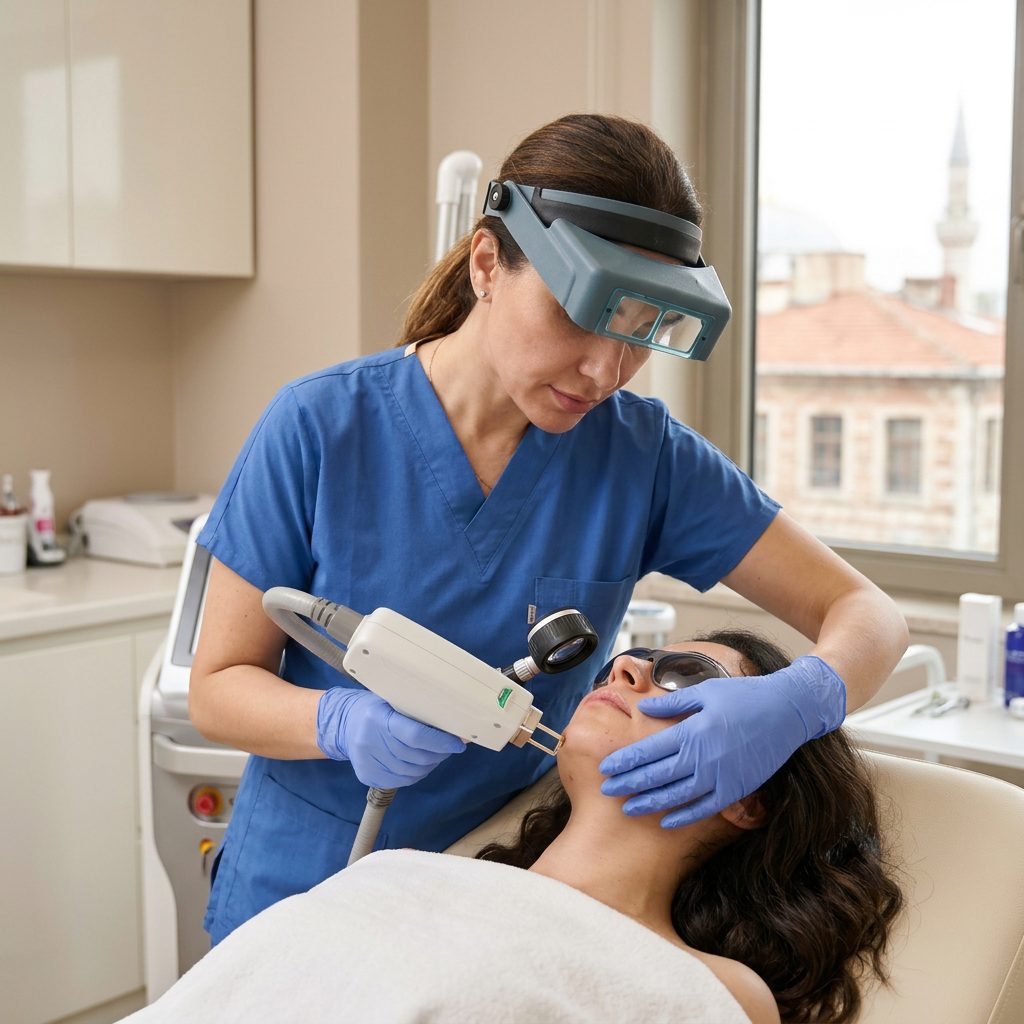
Proper preparation is critical for safe and effective laser hair removal on the face. The skin on the face is delicate and constantly exposed to environmental factors, necessitating strict adherence to pre-treatment protocols. Failing to prepare the skin correctly can result in adverse reactions ranging from prolonged erythema (redness) to superficial thermal injuries.
The Consultation and AI Skin Analysis
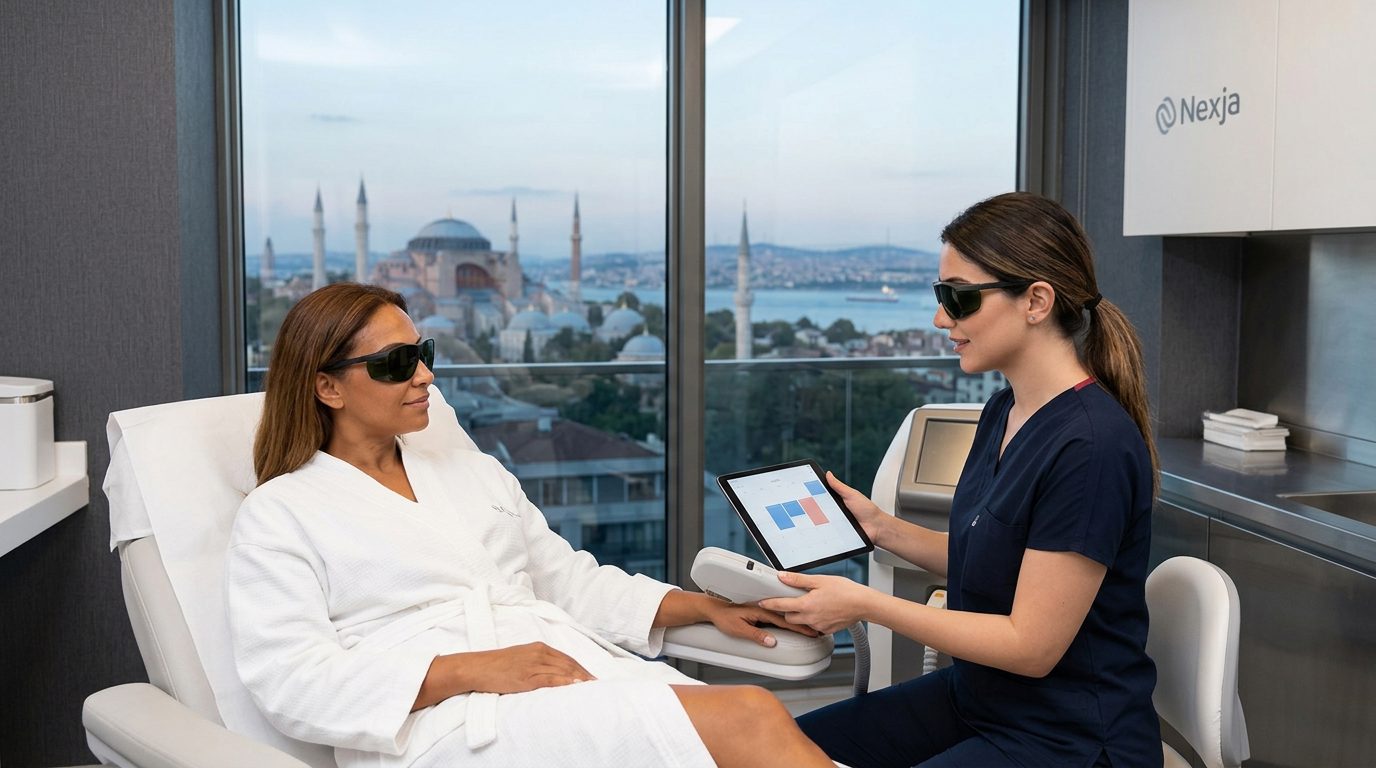
A consultation should include a medical history and examination of the treatment areas. Imaging may help document appearance, but an AI skin analysis cannot rule out contraindications or independently determine safe laser settings. Ask how the practitioner distinguishes coarse terminal hairs from fine vellus hair and how areas unsuitable for laser are excluded. Any concerning skin lesion or sudden unexplained increase in facial hair warrants medical assessment before cosmetic treatment.
Disclose all medicines, supplements, topical products and recent procedures. Continue prescribed medicines according to your prescribing clinician’s instructions; discuss treatment planning with that clinician. Preparation intervals for retinoids, acids or other products should be individualized. If skin is irritated, sunburned or recently tanned, postponing treatment may be appropriate. Obtain written instructions rather than applying a generic one-week rule to every product.
Pre-Treatment Hair Preparation
The most important physical preparation step involves managing the hair itself. You must shorten the facial hair to skin-surface level about 1 day before the laser treatment. This is typically done by careful shaving. Removing the hair above the skin prevents the laser energy from being wasted on the surface hair and prevents the hair from burning on the skin, which can cause burns. The laser needs to target the root beneath the skin’s surface.
Use the preparation method agreed with your provider and avoid irritating or cutting the skin. The usual instruction is to shave the treatment area about one day before the session, leaving the root in place. If shaving causes a rash or cuts, contact the clinic before attending. Depilatory creams can irritate facial skin, so ask before using them close to a laser appointment. Explain any difficulty preparing sensitive areas and request an appropriate alternative.
Treatment Sessions and What to Expect
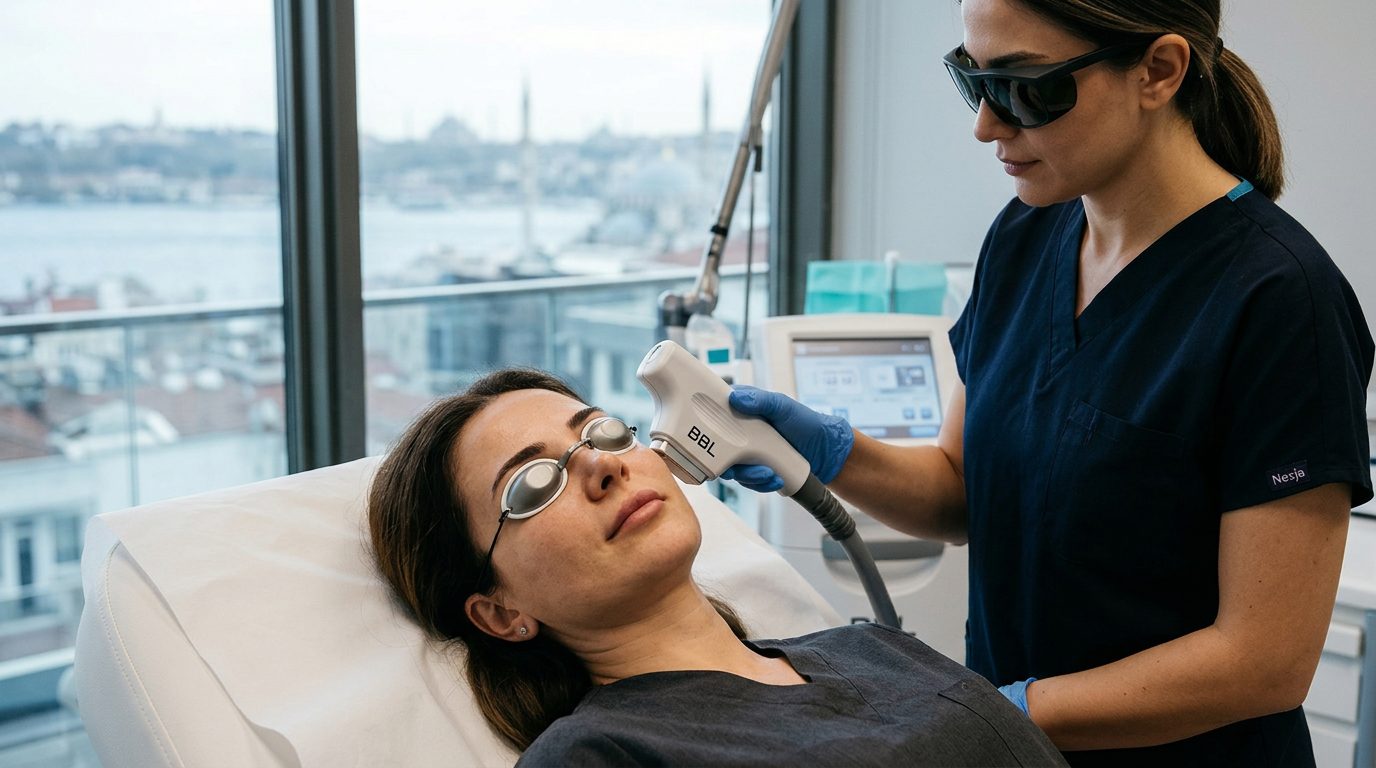
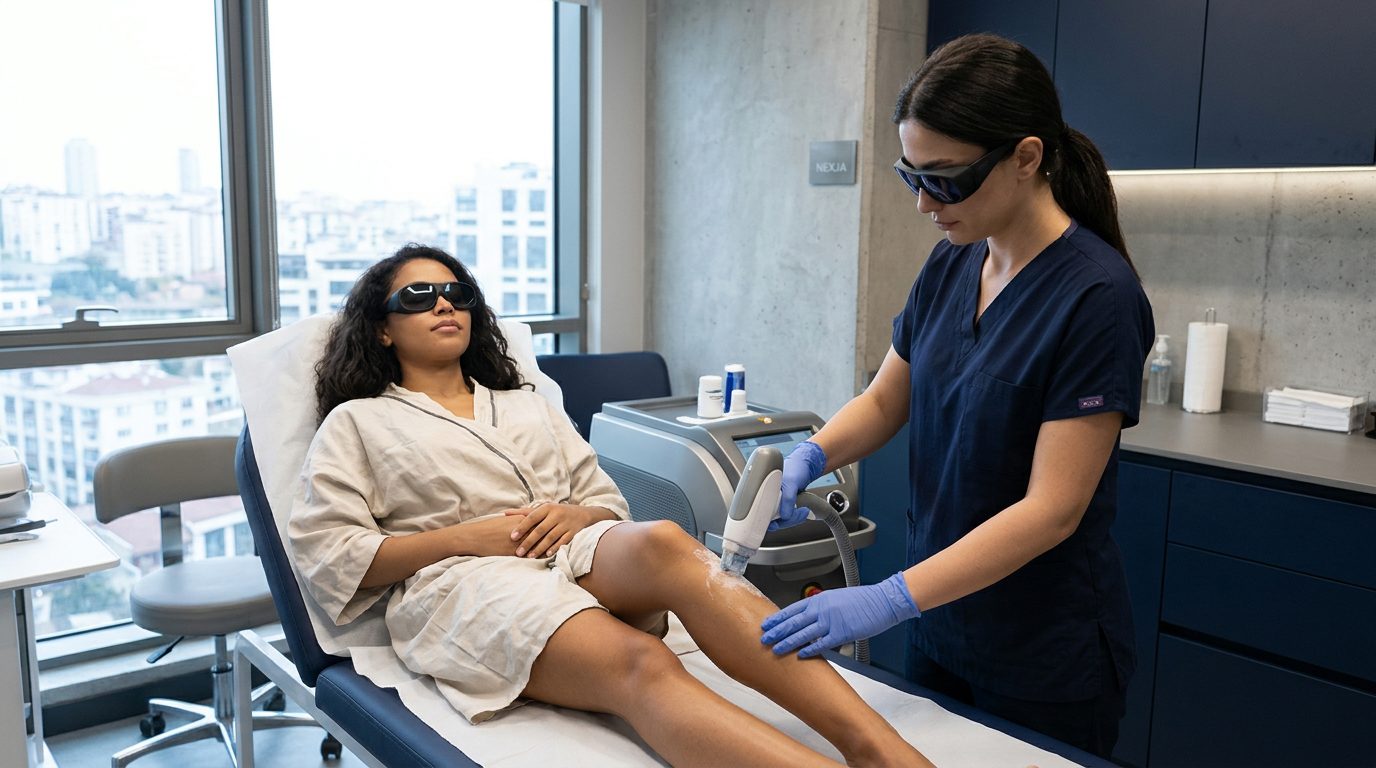
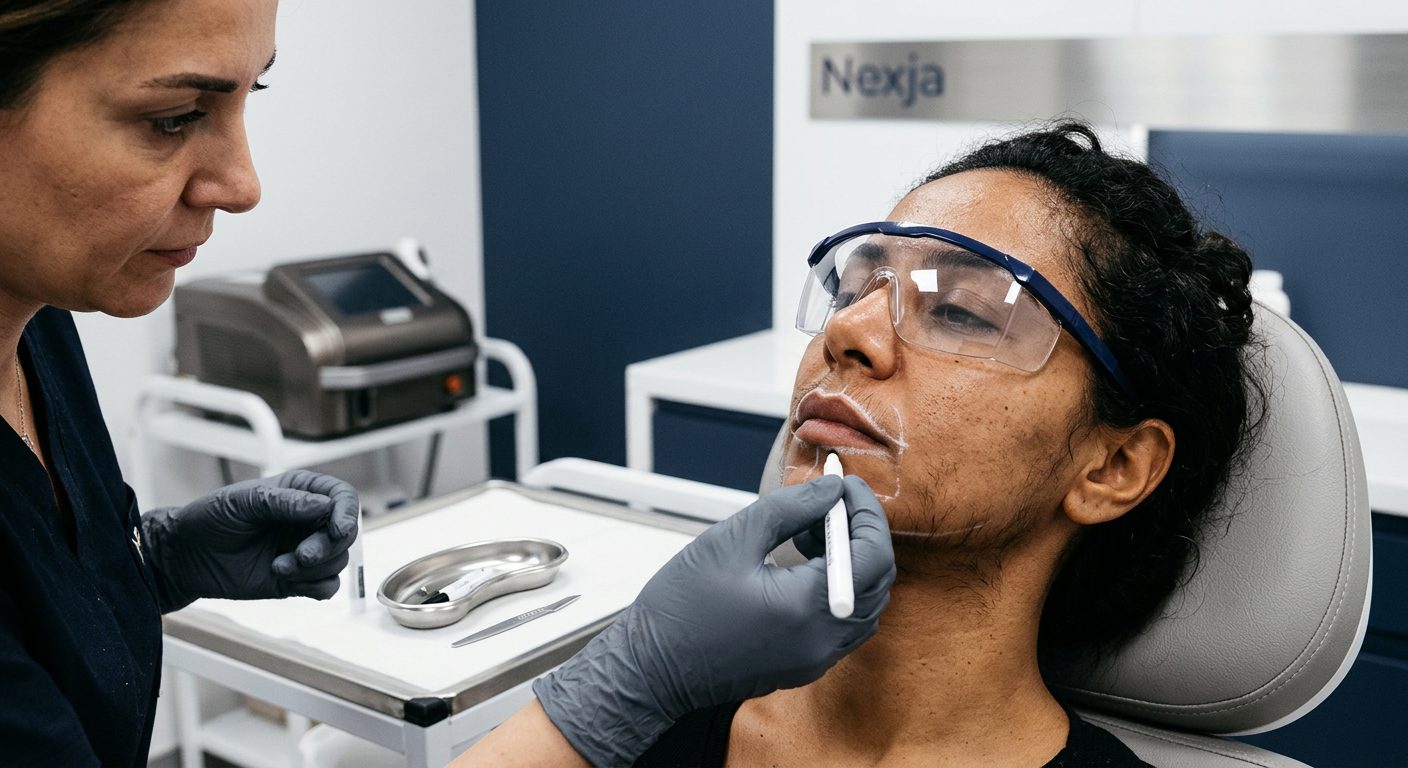
The facial laser hair removal process is relatively quick, but highly technical. After cleansing the area and providing protective eyewear—which is strictly mandatory to protect your retinas from scattered laser light—the practitioner will prepare the skin. They may use a specialized white pencil to draw a grid on your face, dividing the jawline, chin, and upper lip into distinct quadrants. This mapping ensures that every millimeter of the targeted area receives equal laser pulses, preventing uneven patches of remaining hair. Once mapped, the practitioner will apply the laser handpiece to the skin.
You may feel a sensation similar to a small rubber band snapping against the skin, accompanied by a brief burst of heat. Many modern systems incorporate cooling mechanisms to maintain comfort during the procedure. For example, some devices utilize a sapphire contact cooling tip that chills the skin to a near-freezing temperature just milliseconds before the laser fires, helping reduce discomfort. Other systems employ a dynamic cooling device that sprays a burst of cryogen gas onto the skin concurrently with the laser pulse. These technologies are crucial for facial treatments, as the dense concentration of nerve endings around the lips and chin can otherwise make the process uncomfortable.
Hair follicles cycle through growth and resting phases, so a course of treatment is usually required. Treatment aims for a reduction in regrowth, not a guarantee that every follicle is permanently disabled. The AAD overview specifically notes that hormonal effects mean laser results on a woman’s face are not permanent. Review response and maintenance needs during the course rather than assuming that completing a package guarantees total clearance.
Sessions are often separated by several weeks, but timing should follow the individual’s regrowth and the clinician’s plan. A delayed appointment does not automatically undo previous progress or require starting again. Ask when response will be reviewed, what level of reduction is realistic and what would justify changing the approach. Visitors should plan continuity of care between trips rather than compressing sessions into a short holiday.
Aftercare, Risks, and Red Flags
Temporary redness, discomfort and swelling can occur after treatment. These reactions do not prove that a follicle has been permanently disabled, and more inflammation is not a sign of a better result. Ask what recovery is expected for your treatment and how to contact the provider if symptoms worsen. Follow the written aftercare plan rather than judging success from redness alone.
To support your skin’s recovery during the first 3 days post-treatment, you should adopt a minimalist, highly protective skincare routine.
- Sun Protection: Apply a broad-spectrum SPF 30 or higher daily. The treated skin is highly sensitive to UV rays, which can cause hyperpigmentation. Because the laser heat temporarily stresses the skin’s melanocytes (pigment-producing cells), exposing the face to direct sunlight without a physical barrier or high-grade sunscreen can trigger these cells to overproduce pigment, resulting in dark, stubborn spots.
- Avoid Heat: Skip hot showers, saunas, and strenuous exercise for at least 24 to 48 hours to prevent irritation. Follow the provider’s instructions for returning to exercise and heat exposure, adjusted to your skin’s recovery.
- Gentle Skincare: Avoid harsh exfoliants, retinoids, or strong acids on the treated area for several days following your session. Wash your face using only lukewarm water and a fragrance-free, non-comedogenic cleanser. Pat the skin dry with a clean towel instead of rubbing it.
Recognizing Red Flags
Complications can occur even when care is taken; appropriate assessment and technique reduce rather than eliminate risk. Be cautious of clinics that guarantee 100% permanent hair removal in just 1 or 2 sessions—this is a biological impossibility due to the complex nature of human hair growth cycles. The industry standard terminology is “permanent hair reduction,” acknowledging that fine, lighter hairs may eventually return due to hormonal shifts or natural aging.
If you experience severe blistering, intense prolonged pain, or noticeable changes in skin pigmentation that do not resolve, seek medical evaluation. These symptoms often indicate that the laser setting was too aggressive for your skin tone or that the skin was compromised prior to treatment. Ensure your practitioner adjusts the settings appropriately for your skin type at every visit, especially if you have had recent sun exposure. A professional technician will always ask if you have been in the sun since your last visit and may insist on performing a small patch test on the jawline before proceeding with a full session if your skin tone has darkened.
Myths vs. Facts
Navigating the abundance of information regarding aesthetic laser treatments can be overwhelming. Misconceptions often deter individuals from seeking a highly effective solution for facial hair management. Understanding the scientific reality behind the procedure helps manage expectations and ensures you are making decisions based on clinical facts rather than internet rumors.
Treated hairs may shed gradually rather than disappearing during the appointment. Avoid pulling or picking hairs to test whether treatment worked; shedding does not by itself establish permanent follicle destruction. Track changes with consistent photographs and review them with the practitioner. If hair becomes denser or coarser, request assessment before further sessions rather than automatically increasing treatment.
Frequently Asked Questions
How soon can I wear makeup after facial laser hair removal?
Ask the provider when makeup can be resumed for the procedure and skin reaction you experienced. If skin remains irritated, blistered or broken, seek advice rather than covering it for an event. Mineral makeup is not automatically suitable for healing skin. Plan important events with enough flexibility for recovery, and follow the individual aftercare instructions for cleansing and cosmetic products.
Can I have facial laser hair removal if I have hormonal imbalances like PCOS?
Laser may help reduce suitable dark, coarse facial hair in people with PCOS, but it does not treat the underlying hormonal condition and maintenance may be needed. Medical assessment and cosmetic hair management serve different purposes. Discuss new or rapidly increasing hair growth, menstrual changes or other symptoms with a clinician. Ask for an individualized plan, including alternatives when the hair is too fine or lightly pigmented for laser, rather than a promise of permanent clearance.
Is it safe to treat the area between the eyebrows?
Do not assume that treating the space between the eyebrows is safe merely because goggles are worn. Mayo Clinic advises against laser hair removal on the eyelids, eyebrows and surrounding areas because of serious eye-injury risk. Discuss a non-laser alternative for this location with a qualified professional. Eye pain, light sensitivity or any change in vision after a procedure needs urgent medical assessment.
Ready for Clearer, Smoother Skin?
Professional assessment is the first step toward effective facial hair reduction. Determine your suitability and receive a personalized treatment plan in Istanbul.