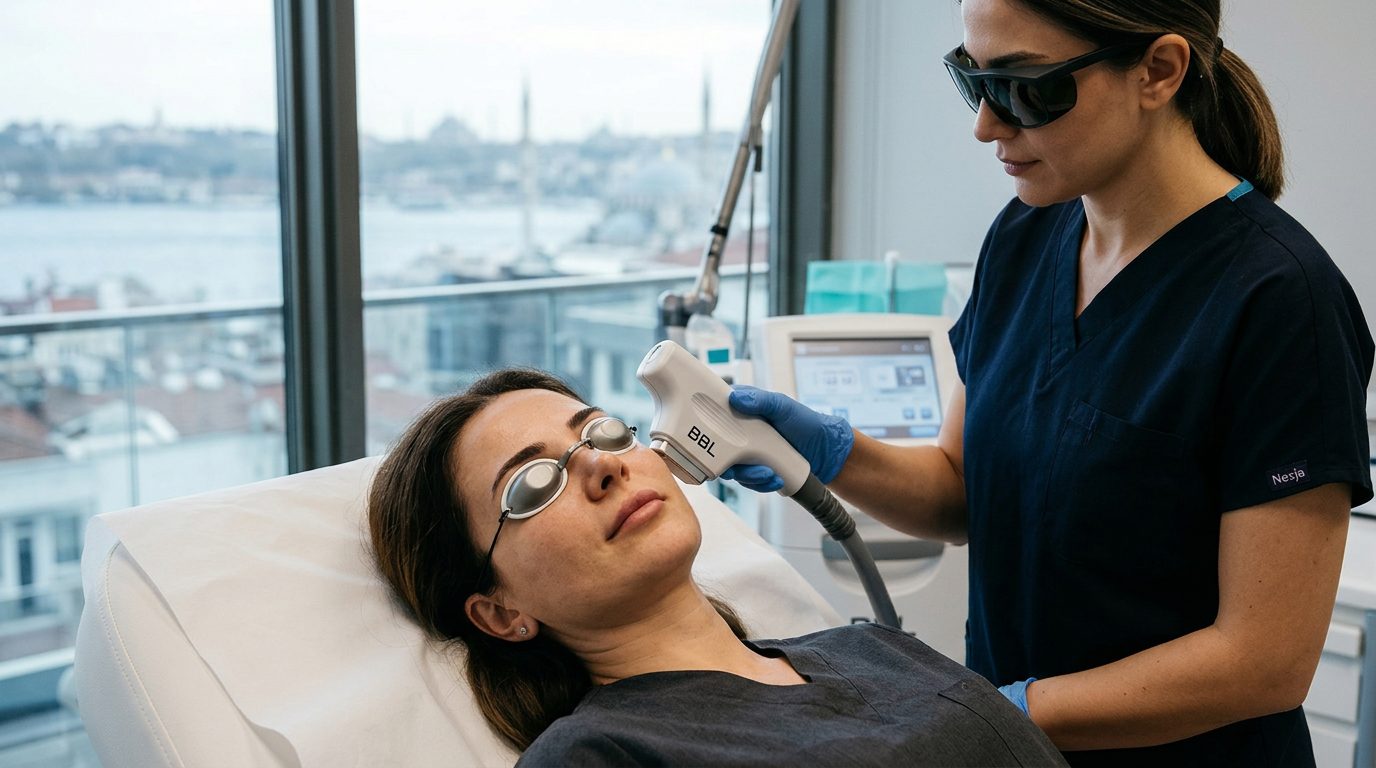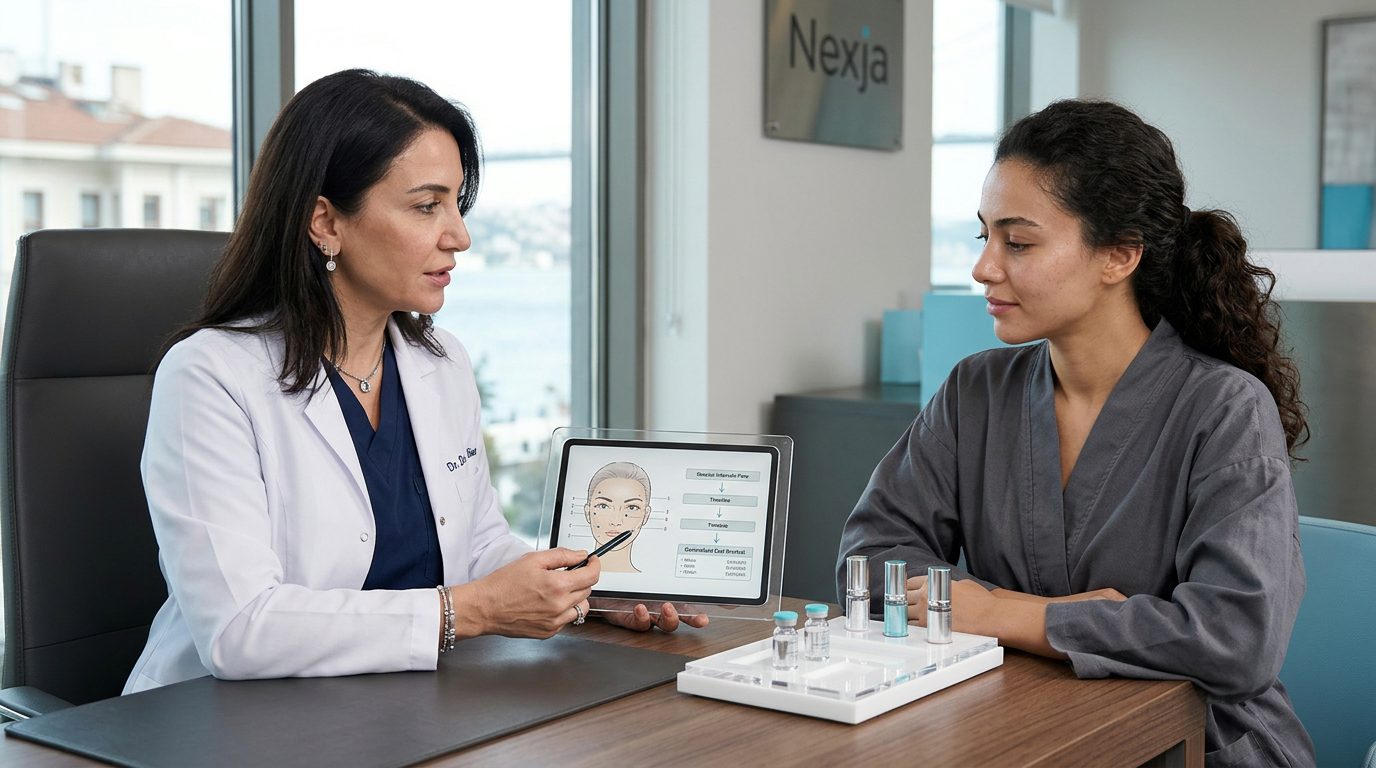


Botox prices in Istanbul depend on the exact product, the areas assessed, the amount prescribed, the clinician’s work and what the fee includes after treatment. A quote for one area cannot be compared fairly with an upper-face package until you know the product, scope and review arrangements. The useful question is not simply “How much is Botox?” but “What does this price cover for my face and my goals?”
For current information, visit Beauty Sila Premium’s medical and cosmetic aesthetics page or contact the team in Fatih. Confirm the availability of an appropriate medical consultation, the treating clinician, the treatment location and the product before booking. A service enquiry is not medical clearance, and a website category does not establish who is qualified to prescribe or inject.
This guide explains how to compare costs without choosing your own dose, buying an unnecessary package or confusing different injectable treatments. It is written for Istanbul residents, expats and visitors who want a clear decision before committing money or arranging travel.
Quick Answer: What Should a Botox Quote Include?
A useful Botox quote identifies the proposed treatment areas, the actual medicine, the basis of charging and the clinician responsible. It also explains whether consultation, review and any clinically appropriate adjustment are included. “Full face,” “three areas” and “touch-up included” need definitions; none is a universal treatment specification.
Before accepting a quote, establish:
- Which concern is being treated and what improvement is realistic.
- Which product is proposed, rather than relying on Botox as a generic nickname.
- Whether the price is per area, per product-specific unit or for an agreed plan.
- Who will assess, prescribe and inject, and in which clinical setting.
- When the response will be reviewed and what additional fees could arise.
- How to obtain help if a concern develops after leaving.
A lower total can reflect a narrower scope. A higher total can reflect more product or additional services. Neither number, by itself, establishes suitability, competence or value.
Why this guide does not give a fixed Nexja price
A fixed figure would leave important clinical and commercial questions unanswered. Two people asking about forehead lines may need different discussions about their goals, existing brow position, previous treatment and acceptable movement. An estimate should follow that assessment.
Request a current written quote tied to the proposed plan. If you are contacting the team before visiting Istanbul, distinguish a preliminary estimate from the final recommendation after medical assessment. Ask whether a deposit is refundable if treatment is not advised.
What Botox means in this article
Botox is a brand name, although people often use the word for botulinum toxin treatment generally. Different products must not be assumed identical. The US BOTOX Cosmetic prescribing information explicitly states that its potency units cannot be compared with or converted into the units of other botulinum toxin preparations. BOTOX Cosmetic prescribing information.
That distinction matters when comparing prices. A lower price per unit for a different product does not automatically mean a lower price for an equivalent treatment. Ask the clinician to explain the proposed product and total plan in ordinary language.
References to brands in this guide are educational. They do not mean that Beauty Sila Premium uses or stocks each brand mentioned.
What Is Botulinum Toxin Treatment?
Botulinum toxin injections temporarily reduce activity in selected muscles. For cosmetic wrinkle treatment, the aim is to soften appropriate expression-related lines, rather than add volume or remove skin. The FDA describes these products as injectable medicines that temporarily reduce muscle movement by blocking nerve activity. FDA: Botulinum toxin products.
For the person considering treatment, the practical distinction is between a concern that may respond to altered muscle activity and a concern that has another cause. A line visible while frowning, a hollow beneath the eye and an area of pigmentation are not interchangeable targets.
Start with what you notice, rather than a predetermined injection request. “I want to understand these lines when I frown” gives the clinician more useful information than “Give me the same amount my friend received.”
Expression lines and lines visible at rest
Ask the clinician to assess your face both at rest and during movement. A photograph taken with a relaxed face may not explain what concerns you during a smile or frown. Equally, an exaggerated expression in a close-up photograph may make a feature seem different from how it appears in daily life.
Describe when you notice the line and what would count as a worthwhile change. Do you want it softened in photographs? Are you concerned about looking tense? Do you want to retain a particular range of expression?
Do not assume every visible line will disappear. The consultation should explain the likely limits for your particular concern. If the recommendation involves another treatment, ask what separate problem that treatment would address.
Botox is not a filler
Botulinum toxin and dermal filler have different purposes. A toxin treatment acts on muscle activity; a filler is used to add volume or support selected contours. The American Society of Plastic Surgeons describes this distinction in its comparison of the two injectable categories. ASPS: Botox and dermal fillers.
This is especially important when discussing lips, cheeks or the jawline. A “lip flip” request is not the same request as lip augmentation with filler. Nor does an advertisement for a sharper jaw establish which treatment, if any, matches your anatomy.
Ask for separate explanations and prices if a combination is proposed. Do not allow a combined package to obscure the purpose, risks or optional nature of each component.
Treatment is a medical decision
An injection appointment may look simple, but product selection, assessment and complication management require medical expertise. The AAD warns against botulinum toxin injections in non-medical settings such as salons, parties and homes. AAD: Botulinum toxin therapy FAQs.
When making an enquiry through a beauty or aesthetics website, establish the actual medical arrangements. Ask who is responsible, where the assessment and treatment occur, and how the person’s credentials can be checked. Do not infer those facts from a brand name, uniform or luxurious room.
Which Areas Are Included in the Price?
Area-based pricing is convenient only when the areas are defined. An “upper-face” offer may refer to forehead lines, frown lines and crow’s feet, but you should confirm the wording used by the provider. A small additional region may be priced separately.
The manufacturer’s US information describes BOTOX Cosmetic for specific adult cosmetic indications, including forehead lines, frown lines, crow’s feet and platysma bands. Those US indications do not establish Turkish authorization, suitability for an individual or availability at a particular center. BOTOX Cosmetic: Treatment information.
| Area or request | What to clarify before comparing prices |
|---|---|
| Forehead lines | Whether the assessment also considers brow position and related upper-face movement |
| Frown lines | The exact region between the eyebrows and the desired degree of softening |
| Crow’s feet | Whether both sides are included and how the smile is assessed |
| Three-area package | The named areas, actual product, review and exclusions |
| Lower-face request | The precise goal, relevant limitations and product-specific status |
| Neck bands | Whether the concern is suitable for this approach and who will assess it |
| “Full face” | Every proposed region and the reason for including it |
| Sweating or another medical concern | A separate medical assessment and indication-specific estimate |
Forehead Botox prices in Istanbul
A forehead quote should describe more than the width of the forehead. Ask what the clinician intends to assess and whether the recommendation involves related upper-face areas. Do not choose injection positions or a dose based on a price list.
If you already have heavy eyelids, a low brow, asymmetry or difficulty raising your eyebrows, mention this before booking. The purpose is to give the clinician relevant information, not to decide your own suitability.
A useful estimate explains the plan after assessment. If you only want information about one concern, you can ask for that without agreeing to a broader package.
Frown-line treatment costs
For frown lines, clarify whether the quoted region is the area between the eyebrows. Explain whether you are mainly concerned about lines during expression or a crease visible at rest.
Ask what degree of improvement is realistic and whether retaining some movement fits your preference. “No movement” and “a softer appearance” are different goals and should not be treated as interchangeable descriptions of success.
The price should reflect the agreed treatment, with review terms made clear. It should not depend on a promise that every line will disappear.
Crow’s feet and both sides of the face
Confirm whether the quote includes both sides. Ask how existing differences between your right and left sides will be documented and assessed.
Bring up eye symptoms, previous eye-area procedures or a history of unwanted reactions. Do not assume a treatment is minor because the region looks small.
If your concern is instead an under-eye hollow, skin texture or pigmentation, say so. An outer-eye wrinkle treatment may not address the issue that prompted your enquiry.
Is three-area Botox better value?
A three-area package can be financially convenient when all included areas are appropriate and desired. It is not automatically a better choice for someone whose concern is limited to one area.
Ask for the price and rationale for the recommended scope. If the clinician advises considering related areas, request a clinical explanation rather than assuming this is either necessary or an upsell.
The useful comparison is between suitable plans. The lowest cost per advertised area is less meaningful if some of those areas are unwanted or unsuitable.
What does “full-face Botox” mean?
There is no single consumer definition that tells you the exact product, amount, sites or intended outcome. Treat the phrase as an invitation to ask for details.
Request an area-by-area explanation. You should understand why each region is proposed, what change is intended and which functions or expressions matter to you.
A full-face label should never replace individual consent. You can agree to one component and decline another, or defer the decision until you understand the plan.
The Main Factors Behind Botox Prices in Istanbul
The price of an injectable treatment is partly a product cost and partly the cost of professional care. Assessment, treatment planning, documentation and follow-up are not visible in the syringe, but they are part of the service you need.
ASPS identifies the amount of product, treatment goals, practitioner expertise and location among the factors affecting cost. Its published US averages should not be used as an Istanbul price estimate. ASPS: Botulinum toxin cost factors.
Product identity and sourcing
Ask for the exact name of the medicine proposed. If an advertisement uses Botox generically, clarify whether the actual product is that brand or another botulinum toxin preparation.
The answer should be available before treatment, along with an explanation of legitimate sourcing and documentation. A photograph of a box in an advertisement does not prove what will be used in your appointment.
Product identity is also important for future care. If you later attend another clinician, an accurate record is more useful than saying that you had “some Botox abroad.”
Amount prescribed
The clinician determines the appropriate amount after assessment. Consumers should not select a dose by comparing friends, social-media posts or a menu of unit bundles.
Ask whether the estimate includes the entire prescribed plan or whether the total could change after assessment. If pricing is unit-based, request the product name, proposed unit total and resulting fee in writing.
The purpose of this information is financial clarity. It is not a guide to self-injection or a reason to seek the highest dose within a budget.
Per-area versus per-unit pricing
Both models require explanation. Per-area pricing may appear simpler, but the boundaries and review policy still matter. Per-unit pricing may appear more transparent, but it is incomplete without the product and prescribed total.
Avoid comparing the number of needle entries with the number of units. Ask the clinician to explain any terminology that is unclear rather than estimating the dose from what you observe.
For two quotes using different products, compare the complete clinically recommended plan. Do not calculate your own conversion between brands.
Consultation and assessment fees
Ask whether the consultation is charged separately and whether that fee is credited toward treatment. Also ask what happens if the clinician advises against proceeding.
A consultation can provide value even if it ends without injections. It may clarify that your concern needs a different assessment, that your timing is unsuitable or that the expected benefit would not justify the cost.
If a consultation is advertised as free, establish whether you can leave without purchasing treatment. Financial pressure should not shape the medical decision.
Review and adjustment policy
“Touch-up included” is one of the most important phrases to clarify. It may mean a review appointment, a limited adjustment if clinically appropriate or a commercial policy with a specific time window.
A review is not a promise of more injections. Ask who decides whether an adjustment is appropriate, whether additional product costs extra and what happens if you cannot attend within the stated period.
Get these terms before treatment. They matter particularly for visitors who may leave Istanbul before the planned review.
Clinician time and continuity
The appointment involves more than the injection itself. A clinician may need to review previous records, assess facial movement, discuss alternatives and document the plan.
Ask whether the same person will perform the review. If another clinician provides follow-up, clarify how the original treatment information will be available.
Continuity can be especially useful when discussing a subtle concern such as a change in expression. It is easier to assess that concern when the baseline observations and original goal are recorded.
Location and amenities
Location, room design and hospitality can influence the experience, but they do not verify medical competence. Evaluate them after confirming the essentials of assessment, legitimate product and appropriate care.
A comfortable environment may matter to someone who is anxious about injections or needs clear communication in another language. That preference is reasonable, provided it does not replace clinical scrutiny.
Choose amenities for the comfort they provide. Do not treat a premium interior as evidence of a guaranteed result.

How to Compare Two Quotes Fairly
Start with the same concern and ask each provider to describe the plan. You do not need identical recommendations, but you do need to understand why they differ.
| Question | Quote A and Quote B should each answer |
|---|---|
| What is being treated? | Named areas and the intended type of change |
| What medicine is proposed? | Exact product identity |
| How is the price calculated? | Area, product-specific units or agreed plan |
| Who is responsible? | Assessing and treating clinician |
| Where will it happen? | Actual treatment setting |
| What is included? | Consultation, treatment, records and review |
| What could cost extra? | Additional areas, product or later appointments |
| What if I am unsuitable? | Deposit and cancellation arrangements |
| What if I have a concern? | Contact, assessment and escalation pathway |
| What happens after travel? | Practical follow-up and records |
A missing answer does not always mean the provider is unsuitable. It means the offer is not yet ready to compare. Ask for clarification and assess how directly the question is answered.
Compare the total decision, not a headline discount
Suppose one offer covers a single area and another covers three areas with review. The second may cost more but include a broader scope. That does not make it better for someone who only wants one concern assessed.
Alternatively, two offers may cover the same areas but differ in whether review is included. The apparent saving may change once you account for another appointment.
These are illustrative purchasing scenarios, not actual price comparisons. Their purpose is to show why an advertisement alone rarely supplies enough information.
Currency, payment and written terms
If a quote is given in a foreign currency, ask which currency will be charged and when any conversion is determined. Request the total payable amount and any relevant payment conditions.
Clarify the deposit, cancellation deadline and policy if medical assessment changes the plan. Do not assume that a treatment credit has the same flexibility as a refund.
For a visitor, also consider ordinary travel costs. An extra night or return journey for review can matter more than a small difference in the treatment fee.
Avoid buying future injections as a fixed obligation
A prepaid package should not turn future medical decisions into automatic appointments. Your health, preferences and response can change.
If a provider offers a multi-visit arrangement, ask how each later treatment is reassessed and what happens if further injections are not appropriate or no longer wanted.
The financial terms should leave room for clinical judgment. A calendar reminder can invite review; it should not be treated as proof that another dose is due.
Benefits: What May Make Treatment Worth Considering?
The relevant benefit is a change that matters to you and is plausible for the concern assessed. For some adults, this means softening selected expression-related lines while maintaining an appearance they recognize.
The AAD describes botulinum toxin treatment as temporarily relaxing targeted facial muscles to diminish suitable lines. It notes that the effect commonly lasts around three to four months, sometimes longer. This is general guidance, not a promise for every product, area or person. AAD: Botulinum toxin overview.
A worthwhile consultation translates that broad possibility into your situation. Ask what the clinician expects to change and what is likely to remain.
Define your preferred result in plain language
Words such as “natural,” “fresh” and “subtle” are useful starting points, but people interpret them differently. Explain what they mean to you.
You might want to retain visible forehead movement, soften a tense-looking frown or avoid changing your smile. Mention features you like as well as features that concern you.
Bring reference images only as communication aids. Another person’s face is not a treatment blueprint, and a filtered photograph may not represent an achievable or desirable outcome.
Benefits should be evaluated against your priorities
Consider whether a temporary cosmetic change is worth the cost, the appointment and the possibility of an unwanted effect. There is no obligation to maintain treatment because you tried it once.
Someone who enjoys the result may choose future reassessment. Someone who values unrestricted expression more than smoother lines may make a different decision.
The right consultation helps you articulate that preference before treatment, rather than persuading you that one aesthetic standard applies to everyone.
Realistic Limitations: What Botox Cannot Promise
Botox should not be presented as a universal answer to every facial concern. A treatment aimed at muscle activity is not the same as restoring lost volume, treating pigmentation, improving an acne scar or surgically removing excess skin.
Ask the clinician to separate your concerns. If you describe tired-looking eyes, for example, the explanation should identify which aspect you mean before proposing a treatment.
Do not accept a guarantee of perfect symmetry, complete wrinkle removal or an exact duration. Your baseline appearance, goals and response need individual discussion.
A temporary treatment still deserves careful planning
Temporary does not mean immediately reversible. If you dislike an effect, the next step is professional assessment, not a home technique or an assumption that a different injectable can simply undo it.
The possibility that an effect will change over time does not make an unwanted appearance unimportant. Ask before treatment how concerns are handled and what support is available.
For a first appointment, leave room in your schedule to understand your response. A major event or imminent departure can make even a temporary concern more difficult to manage.
“Preventative Botox” is not a reason to treat everyone
Do not let a marketing label create a sense that you are late or missing a necessary health measure. Cosmetic injections are optional.
If you have little visible concern, ask what specific benefit is being proposed now, what uncertainty exists and whether waiting is reasonable. Age alone should not replace an assessment of your goals and situation.
A responsible discussion should allow you to decide that ordinary skin care, observation or no cosmetic treatment fits your priorities better.
More treatment is not automatically a better result
A larger invoice, a higher unit count or more treated regions does not necessarily mean that your goal has been better addressed.
Ask whether every component has a clear purpose. If a new area is suggested during the appointment, take time to understand the recommendation and its cost.
You can proceed with a narrower agreed plan or defer an addition. Consent should remain a decision you actively make, rather than something that expands with the appointment.
Who May Consider Treatment?
An adult who wants a specific expression-related concern assessed may consider a medical consultation. That does not mean the person will necessarily be advised to have injections.
Suitability includes the nature of the concern, health history, previous treatment, expectations and ability to obtain follow-up. A clinician should explain how those factors affect the decision.
Your reason for attending matters. If you feel pressured by a partner, workplace expectation or an imminent event, take time to decide whether the change is something you personally want.
First-time patients
For a first appointment, focus on understanding the process rather than deciding in advance how much product you should receive. Ask what will be assessed, what information to bring and whether consultation can be separate from treatment.
Explain any fear of needles, fainting history or anxiety about altered expression. These are practical concerns that deserve attention during planning.
You do not need to commit at the first consultation. A written recommendation can give you time to compare the proposed benefit with the cost and your comfort level.
Returning patients
Bring the date, product and available records from previous treatment. Describe what you liked, what you disliked and when you noticed changes.
Do not assume that repeating the previous plan is automatically appropriate. A review should consider your current appearance, health and goals.
If you are changing providers, accurate information is especially useful. Avoid asking the new clinician to reconstruct a treatment solely from the number of injections you remember.
Men and women
A gender label does not determine a complete treatment plan. Ask for assessment of your actual facial movement, anatomy and preferred appearance.
If a provider advertises separate men’s and women’s prices, request an explanation of how the quote relates to the proposed scope and product amount. The relevant question is what you are being prescribed and why.
Describe your aesthetic preferences directly. Do not assume a clinician can infer whether you want a stronger-looking brow, softer lines or a particular degree of movement from gender alone.
Who May Need to Postpone or Avoid Treatment?
Medical assessment must happen before injection. The US BOTOX Cosmetic label lists allergy to botulinum toxin preparations or formulation components and infection at the proposed site as contraindications. It also highlights increased concerns with neuromuscular disorders and swallowing or breathing difficulties. BOTOX Cosmetic: Contraindications and precautions.
This is not a complete screening list. The clinician must use the information applicable to the exact product and your circumstances.
Pregnancy and breastfeeding
Elective cosmetic treatment should be discussed with your clinician and generally deferred during pregnancy or breastfeeding. The manufacturer states that it is not known whether BOTOX Cosmetic can harm an unborn baby or passes into breast milk. Do not interpret missing evidence as a guarantee of safety. BOTOX Cosmetic: Important safety information.
Tell the clinician if you are pregnant, planning pregnancy or breastfeeding before the appointment is confirmed. Do not rely on the small size of the proposed area as a reason to bypass that discussion.
Medical conditions and medicines
Provide a complete medication and health history, including non-prescription products and supplements. The AAD specifically recommends sharing medicines, supplements, previous surgery and cosmetic treatment before botulinum toxin therapy. AAD: Preparing for consultation.
Do not stop prescribed treatment on your own to reduce bruising or qualify for a cosmetic appointment. The appropriate prescriber should advise on any necessary change.
A short online booking form may not capture everything relevant. Bring a written list if that makes disclosure easier and more accurate.
Recent injections elsewhere
Tell the clinician about recent botulinum toxin treatment, including treatment for a medical condition. The manufacturer asks patients to disclose other toxin products received within the preceding four months and identify the exact product. BOTOX Cosmetic: Patient information.
Do not treat separate clinics as separate treatment histories. The assessing clinician needs the combined picture.
If records are missing, explain that uncertainty. It is better to pause for clarification than to provide a guessed dose or date.
Skin changes or illness before the appointment
Report a new rash, infection, wound or other change near the proposed area before attending. Also report a significant change in your general health.
A deposit or travel booking does not make treatment appropriate when the clinical situation has changed. Ask how postponement is handled before paying.
If you have a new facial weakness, vision problem or unexplained symptom, seek medical evaluation rather than assuming cosmetic injections are the appropriate next step.
Risks: What You Should Understand Before Paying
Possible effects include local pain, swelling, bruising and unwanted changes in nearby muscle activity. A clinician should explain the risks for the product, region and individual rather than presenting a general “no downtime” promise.
The prescribing information carries a warning about toxin effects spreading beyond the injection area. Trouble breathing, swallowing or speaking requires immediate medical attention; symptoms can occur hours to weeks after injection. BOTOX Cosmetic: Boxed warning.
Local effects and appearance concerns
Ask what temporary local changes are expected and which changes should prompt contact. The AAD describes bruising, redness, swelling and soreness, and notes that unwanted nearby muscle weakness can produce a drooping brow or eyelid. AAD: Possible side effects.
If you notice an unexpected change, contact the treating clinician for assessment. Do not attempt to correct it by pressing, massaging or arranging more injections without review.
Your concern deserves a clear response even if the effect is expected to be temporary. Ask about the assessment pathway before treatment so you know what to do.
Emergency symptoms are different from routine review
Difficulty breathing, speaking or swallowing should not wait for a scheduled aesthetic review or a social-media reply. Obtain urgent medical help and tell the medical team about the recent injections.
Keep your product and treatment information accessible. If you are abroad, a concise record can help another clinician understand what was administered.
An emergency plan does not mean a complication is expected. It means you know how to act if one occurs.
Counterfeit and mishandled products
Legitimate sourcing matters. The FDA has documented counterfeit Botox products, and the CDC investigated harmful reactions associated with counterfeit, unverified or improperly handled products and inappropriate administration settings. FDA: Counterfeit Botox alert, CDC: Investigation findings.
These reports concern specific investigations and should not be used to accuse an unrelated provider. They do explain why product transparency and clinical accountability are important purchasing questions.
Ask how the medicine is sourced and recorded. Packaging appearance alone cannot replace a legitimate supply chain and professional handling.
What a Useful Consultation Should Establish
Your goal and baseline
The clinician should understand what you want changed and what you want preserved. Explain both in concrete terms.
Ask how baseline appearance and movement will be recorded. Comparable photographs can support later discussion, but a photograph does not replace a clinical examination.
Mention asymmetry you already notice. The purpose is to create an accurate starting point, not to demand an artificially identical face.
The proposed plan and alternatives
Request a clear explanation of the recommended areas, product and intended change. Ask which concerns the treatment will not address.
If an alternative is suggested, ask why it fits better. A different recommendation may be useful, but it should not become a confusing list of every service available.
You should understand the option of no treatment. Choosing to wait can be a reasonable outcome of an informative consultation.
The responsible clinician
Confirm who will assess you, who will prescribe where applicable and who will inject. Ask how their professional credentials can be verified and who is available if a problem occurs.
Do not rely on social-media titles or a certificate displayed without context. The qualification must be relevant to the actual medical procedure and local requirements.
If information is unclear, resolve it before making a treatment commitment. A reception enquiry can arrange a consultation but cannot substitute for the clinical discussion.
Consent and photographs
Read the consent information and ask about anything you do not understand. Important decisions should not depend on an explanation you cannot follow because of language barriers.
Ask separately about photography for your record and photography for advertising. You should understand what is being requested and where images may be used.
A willingness to have treatment does not automatically mean a willingness to appear in promotional content.
Written cost and follow-up
Before proceeding, know the expected total, the included review and the contact route afterward. If the scope changes during assessment, ask for the revised estimate before accepting it.
Keep the written plan and any patient information provided. These records are useful if you later review the outcome or consult another professional.
For international visitors, establish how follow-up works after departure and when an in-person assessment would be necessary.
What Happens at the Treatment Appointment?
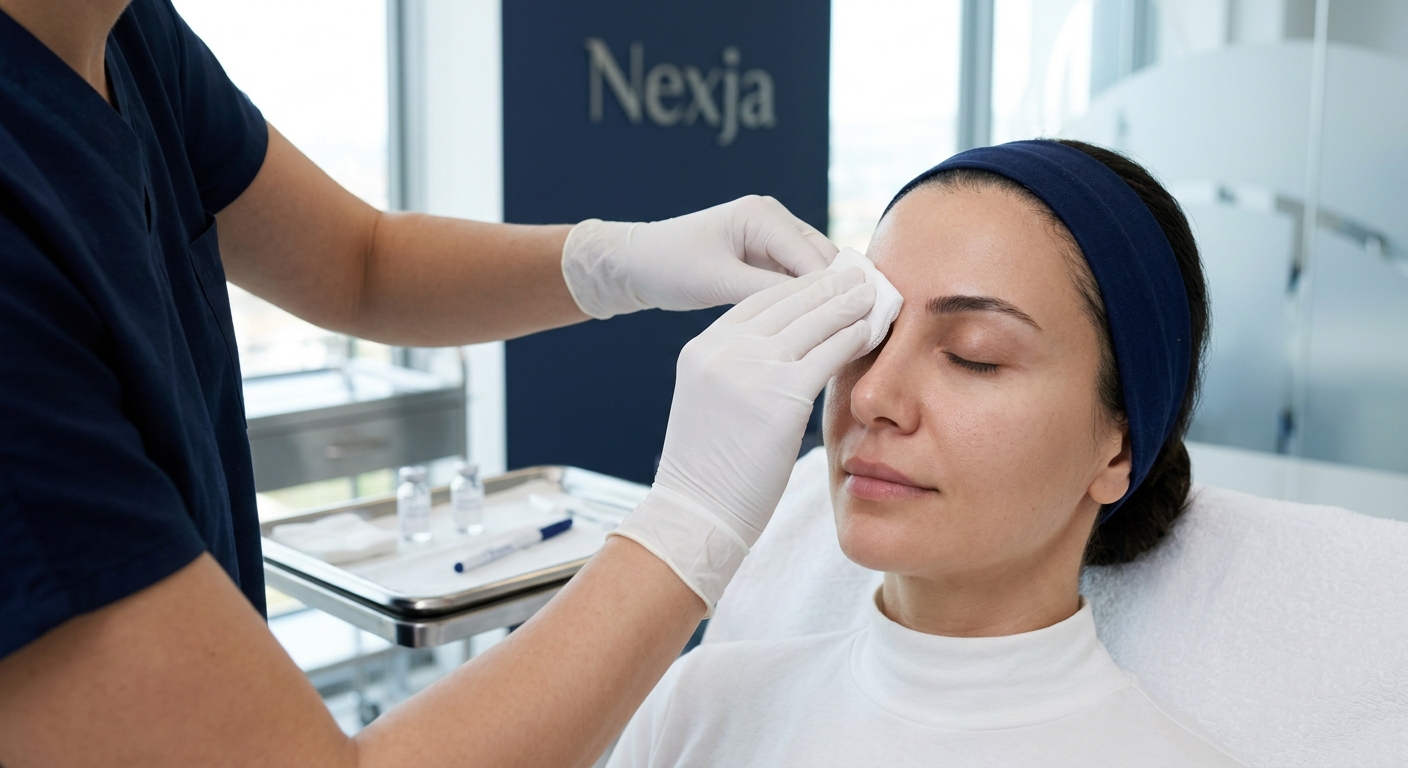
The exact clinical steps depend on the product and plan. In general, the appointment should include confirmation of relevant history, assessment of the proposed areas, consent and treatment by the appropriate clinician.
Do not assume the injection portion is the full appointment. Leave time for discussion, documentation and aftercare.
Ask how to communicate discomfort or request a pause. If you feel faint or unwell, tell the clinician immediately rather than trying to complete the appointment silently.
Preparation in the room
The clinician should explain the planned procedure and prepare the area appropriately. Ask questions before injections begin if the product, scope or consent remains unclear.
There is no need for a consumer to memorize injection maps. Your role is to provide accurate information and understand the decision; the technical plan belongs to the qualified professional.
If an unexpected additional treatment is proposed, you can defer it. Being in the treatment chair does not remove your ability to reconsider.
Before leaving
Confirm that you have aftercare instructions, a review plan and a way to contact the clinical team. Ask which symptoms need urgent attention and which can be discussed at routine review.
Request a record of the product and treatment. If you expect to travel, keep a copy that you can access without relying on a single messaging application.
You should leave knowing what happens next, even if the next step is simply observation until the planned assessment.
When Do Results Appear, and When Should They Be Reviewed?
Do not expect to judge the final appearance immediately after leaving the appointment. The AAD says that many people begin noticing a change within three to seven days. The manufacturer’s current US information describes early changes that may begin within 24–48 hours and assesses full results at 30 days. These are different descriptions of onset and assessment, not a guarantee of an individual timeline. AAD: Treatment overview, BOTOX Cosmetic: Treatment journey.
Ask the treating clinician when your response should be reviewed. A review scheduled for a particular date should be understood as a clinical assessment, not an automatic instruction to add product.
How long does an appointment take?
The injection portion can be relatively brief, but the total booking includes assessment, discussion and aftercare. Do not plan around an advertised injection time alone.
Ask the provider for the expected appointment length and whether the first consultation is separate. A first visit may involve questions that a returning patient has already discussed.
Leave enough time to make a considered decision. An appointment squeezed between transport connections is a poor setting for resolving unanswered clinical questions.
How often will I need treatment?
Future treatment should depend on reassessment, the product information, your response and your preferences. Do not commit to an interval solely because a package offers several appointments.
Ask the clinician how repeat treatment is planned and what would justify waiting longer or not continuing. Keep cosmetic goals separate from treatment for a medical condition.
Budget for a temporary effect if you are considering ongoing care, but do not treat a budget estimate as a schedule that overrides clinical judgment.
How should I compare results?
Use the same expression, lighting, angle and camera distance where possible. A relaxed face and a raised-brow photograph answer different questions.
At review, describe what you notice in ordinary life rather than only in a magnified selfie. Explain whether the change matches your original priorities.
Bring questions about movement, symmetry or comfort to the clinician. Avoid diagnosing the cause from a photograph or relying on strangers to recommend corrective injections.
What if the result seems weaker than expected?
Request a review of the original goal, product record and timing. A concern about limited effect should lead to assessment, not an automatic purchase of a larger amount.
Ask whether the concern being judged was one the treatment was intended to address. A line or feature that had another cause may need a different explanation.
Do not assume that a disappointing result proves resistance, counterfeit product or poor practice. Those are different possibilities requiring evidence; the first step is a clear clinical discussion.
What if I do not want to continue?
You can decide against future cosmetic treatment. Ask the clinician what to expect and discuss any concern about the current effect.
Do not feel obliged to maintain an appearance because other people have become accustomed to it. Your preferences can change.
A good record of what was done remains useful even if you choose no further treatment. Keep it with your other relevant health information.
Preparation Before Botox: A Practical Checklist
The most important preparation is accurate information and an agreed plan. Ask for product-specific instructions from the treating clinician.
Prepare the dates and names of previous injectables, relevant medical history, medicines and supplements. Mention any previous unwanted response and any planned procedures.
The AAD recommends discussing expected results, individual risks, cost and the identity of the person giving the injections during consultation. AAD: Questions before treatment.
Medicines and bruising questions
Ask the clinician about medicines or supplements that may be relevant to bruising or treatment safety. Do not follow a blanket internet instruction to stop aspirin, anticoagulants or another prescribed medicine.
If a change is considered necessary, the relevant prescribing professional should guide it. Cosmetic convenience should not override the reason a medicine was prescribed.
Bring the actual product names rather than relying on memory. This is especially helpful when travelling with medicines sold under different brand names.
Makeup and skin care before the visit
Ask whether the provider prefers you to arrive without makeup on the proposed areas. Also mention active irritation or a recent reaction to a skin-care product.
Do not undertake an aggressive facial, peel or unfamiliar home treatment simply to prepare for injections. If another procedure is planned, discuss the sequence with the clinician.
The aim is to allow a clear assessment and appropriate preparation. A complicated new routine is not a requirement for being a suitable patient.
Alcohol, exercise and other pre-appointment plans
Ask for the clinic’s specific instructions rather than assuming every online checklist is equally applicable. Explain your usual activities and any event immediately before or after the appointment.
If instructions are unclear or conflict with advice from your own clinician, clarify them before proceeding. Do not try to resolve medical uncertainty by choosing the most restrictive internet rule.
Preparation should be understandable and proportionate to the actual procedure. You should know why an instruction matters and whom to contact if you cannot follow it.
Prepare for informed consent
Choose a time when you can concentrate and ask questions. If you need language support, arrange it before the appointment.
Write down your main concern, the features you want preserved and the questions that would affect your decision. This helps keep the consultation focused.
You can attend with a trusted person if the provider’s arrangements allow it, but the decision should remain yours. Avoid agreeing because someone else is enthusiastic about the result they received.
Aftercare and Downtime
Follow the instructions for the actual product and procedure. General guidance can help you prepare questions, but it should not replace the treating clinician’s advice.
The AAD advises avoiding rubbing or massaging treated areas, applying makeup without pressing or rubbing, and waiting at least two hours before strenuous activity. Individual instructions may differ according to the treatment and circumstances. AAD: Aftercare guidance.
Can I wear makeup afterward?
Ask the clinician when and how to apply makeup after your appointment. If permitted, follow the advice about gentle application and avoid pressing on the treated areas.
Consider whether you need makeup for an event immediately afterward. It may be more comfortable to leave flexibility rather than plan a demanding appearance commitment.
Do not use cosmetics to conceal an unexpected reaction without seeking advice when needed. Appearance and medical assessment are separate priorities.
Can I return to work?
Discuss the nature of your work. A desk-based day, physical labour, performance work and a job in a hot environment create different practical questions.
Ask about visible local effects as well as activity restrictions. Being able to work does not mean there will be no redness or bruising.
If your work depends on a particular expression or close-up filming, explain that before treatment. The clinician should understand why a small change may have a large practical impact for you.
Exercise and gym sessions
Ask when to resume your actual activities, including heavy lifting, running or classes involving face-down positions. Do not assume a gentle walk and an intense workout are equivalent.
Follow the agreed advice rather than testing your tolerance to prove the treatment has no downtime. If your schedule cannot accommodate the instructions, choose another appointment date.
Fitness goals should not be used to pressure you into ignoring discomfort or unexpected symptoms. Raise concerns with the clinician.
Hammam, sauna and facial massage
A hammam may involve heat, steam, scrubbing and massage. Explain which parts of the experience you have booked and ask when they are appropriate.
Do not interpret advice about an ordinary shower as permission for an intensive spa session. Similarly, a facial appointment may involve pressure or another procedure that needs separate planning.
If you are visiting Istanbul for several beauty services, provide the full itinerary. The safest sequence cannot be inferred from the order in which appointments are available.
Sun and sightseeing
Plan ordinary sun protection and comfortable travel, and ask whether your treatment creates any additional considerations. Do not assume injections replace the need to care for your skin outdoors.
If a day involves long walks, heat or limited access to the clinic, tell the provider. The practical question is whether the plan fits the aftercare instructions and your comfort.
There is no need to turn a consultation into a list of tourist restrictions. A clear description of your actual activities produces more useful advice.
Sleeping and everyday habits
If you have questions about sleeping position, hats, helmets or skin-care devices, ask the treating clinician directly. Avoid adding unnecessary routines based on social-media claims.
Do not deliberately press, massage or manipulate the treated area to change the result. If something worries you, request assessment.
Written instructions should be specific enough that you can follow them without repeatedly guessing. Ask for clarification before leaving if an instruction is ambiguous.

Botox Versus Other Aesthetic Options
A comparison is useful when it starts with the concern rather than a ranking of fashionable treatments. The right question is which option, if any, addresses your goal with an acceptable balance of benefit, risk and commitment.
| Option | Main question to discuss | Cost factors to clarify |
|---|---|---|
| Botulinum toxin | Is selected muscle activity relevant to the concern? | Product, prescribed amount, areas and review |
| Dermal filler | Is volume or contour support the intended goal? | Product, amount, area and follow-up |
| Skin-quality injectable | What exactly is the product and intended purpose? | Formulation, procedure, course and evidence |
| Resurfacing or another skin procedure | Is texture or surface change the priority? | Method, treatment extent, recovery and sessions |
| Surgery | Does the goal involve a change that non-surgical options cannot reasonably provide? | Specialist assessment and full surgical care |
| No procedure | Would waiting or ordinary care fit your priorities? | No commitment to an unwanted intervention |
Botox versus a skin booster
Do not assume that “skin booster” identifies one standard medicine or procedure. Ask for the exact product and what benefit is being proposed.
If the concern is expression-related movement, the discussion differs from a skin-quality goal. A clinician should explain whether the proposed treatment addresses the issue you actually want changed.
Compare the total plan and evidence for each option. A package combining them should have a separate rationale for each component.
Botox versus filler for a facial line
Ask what is contributing to the line before choosing an injectable category. The fact that both treatments involve needles does not make them substitutes.
If filler is recommended, request its own explanation of risks and follow-up. Do not let consent for one treatment become consent for another without discussion.
A more expensive combination is not automatically more complete. It is appropriate only if the additional treatment has a justified purpose that matters to you.
Can treatments be combined?
Possibly, but the clinician should assess the entire plan, including timing and the purpose of each component. Avoid booking independently with several providers who do not know about one another’s work.
Ask whether a staged approach would make decisions easier. Reviewing one treatment before adding another can sometimes provide greater clarity, but the appropriate sequence is individual.
You can request separate costs for each component and decide on them separately. A bundle should simplify administration, not remove choice.
Planning Botox Around an Istanbul Visit
A short trip can make the treatment fee only one part of the decision. You also need time for consultation, an appropriate assessment and a practical review plan.
Beauty Sila Premium’s contact information places the business in Aksemsettin, on Fevzi Pasa Caddesi in Fatih. Confirm the actual location of any medical consultation and treatment when enquiring through the contact page.
Do not assume that staying nearby removes the need for follow-up. The response may still be developing after your departure.
Beginning or end of the trip?
Discuss your arrival and departure dates before paying a deposit. Ask whether your stay allows the clinician’s recommended assessment and review.
Booking at the beginning may provide more time locally, but that is not a universal instruction. Your health, other procedures and itinerary still matter.
If the trip is too short for sensible planning, a consultation without treatment may be the better use of the visit. Travel availability should not determine a medical decision.
Can I fly afterward?
Ask the treating clinician about your actual departure time, flight length and access to care. Avoid treating a generic internet waiting period as personal clearance.
The main planning issue is not simply boarding a plane. It is whether you can obtain advice and assessment if something changes after you leave.
Keep your treatment record and contact details accessible while travelling. If urgent symptoms develop, seek medical care where you are rather than waiting to return to Istanbul.
Weddings and important events
Avoid planning a first treatment immediately before a major event. You need time to understand your response and accommodate possible visible local effects or an appearance concern.
Tell the clinician the event date and ask whether the timing is sensible. Do not buy a guarantee that a particular expression or wrinkle will look a certain way on that day.
If the schedule is tight, postponement can be a positive decision. An optional procedure should not create avoidable pressure around an important occasion.
Follow-up after leaving Turkey
Ask who will answer clinical questions, which communication channel is used and when an in-person review is necessary. A remote photograph may help start a conversation but cannot resolve every concern.
If you later consult a clinician at home, provide the original treatment details. Do not arrange an immediate adjustment elsewhere without a full assessment and disclosure.
Clarify any practical and financial limits of the original review policy before treatment. “Support available” should mean something you can actually use.
Choosing a Provider: Questions That Matter
A polished website can help you find a service, but your decision should rest on specific answers. Establish the clinical responsibility, legitimate product, appropriate setting and follow-up route.
Ask about experience with the area you want assessed, how suitability is decided and how unexpected effects are managed. You do not need to be confrontational; these are ordinary questions before an elective medical procedure.
The answers should remain understandable after the consultation. If technical language obscures the decision, ask for a simpler explanation.
The Nexja Select principle
Nexja Select emphasizes purposeful selection of professional options. In an injectable-treatment discussion, that principle is most useful when it leads to clear product information and a plan based on the person’s goal.
A selected product still requires an appropriate prescriber, legitimate sourcing and individual assessment. A brand philosophy is not a substitute for those medical requirements.
Use the principle as a question: why is this particular option being proposed for this particular concern? The answer should be more specific than “premium” or “popular.”
Red flags
Pause before proceeding if the offer includes:
- A guaranteed result or identical plan for everyone.
- An unidentified medicine or refusal to discuss sourcing.
- No meaningful health-history review.
- Unclear clinical responsibility or treatment setting.
- Pressure to purchase extra regions during the appointment.
- A promise that more product will solve every concern.
- No practical route for assessment after treatment.
- A discount that depends on deciding before your questions are answered.
A low price alone does not prove poor care, and a high price does not prove good care. The concern is an unclear or inappropriate process.
Myths Versus Facts
Myth: Every treatment called Botox uses the same medicine.
Ask for the exact product. A familiar nickname is not a complete treatment record.
Myth: The cheapest price per unit is automatically the best deal.
Compare the product-specific prescribed plan, scope and follow-up. Do not convert units between brands yourself.
Myth: A free touch-up means everyone should receive more injections.
A review should assess the response. Any further treatment needs a clinical reason.
Myth: A larger package always creates a better result.
Only appropriate and wanted components belong in a plan.
Myth: A short appointment is not a medical procedure.
The injection time does not determine the expertise or responsibility required.
Myth: A filtered photograph is a reliable target.
Discuss realistic changes to your own face and the expressions you want to preserve.
Myth: Temporary treatment means there is nothing to consider afterward.
Understand aftercare, unwanted effects and access to review before proceeding.
Frequently Asked Questions
1. How much does Botox cost in Istanbul?
The total depends on the product, prescribed scope, clinician and inclusions. Request a written estimate after an appropriate assessment. For current enquiries, use Beauty Sila Premium’s medical aesthetics page. Confirm clinical arrangements and review terms before treating a headline price as the final cost.
2. Is Botox charged per area or per unit?
Providers may use either model or an agreed treatment-plan fee. Ask which model applies and what it includes. Per-area pricing needs named boundaries; per-unit pricing needs the exact product and prescribed total. Neither format removes the need for individualized assessment and a clear review policy.
3. Why are online Botox prices so different?
The offers may use different products, cover different areas or include different services. Some are preliminary estimates rather than final recommendations. Compare consultation, treatment scope, clinical responsibility and follow-up before drawing conclusions from the advertised amount. Ask for clarification where a quote leaves those details open.
4. Does a three-area package include both eyes?
Ask the provider to define the package. Do not assume that every business uses the same area terminology. Request the named regions, whether both sides are included and any exclusions. The final scope should still depend on the assessment and what you actually want treated.
5. How many units will I need?
Only the assessing clinician can recommend an appropriate amount for the actual product and plan. Do not copy a friend’s dose or estimate it from social media. Ask for the proposed total and cost after assessment, and keep the treatment record for future care.
6. Are Botox units interchangeable with other brands?
No. The BOTOX Cosmetic label states that its units cannot be compared with or converted into those of other botulinum toxin preparations. Compare complete product-specific plans rather than unit numbers alone. BOTOX Cosmetic prescribing information.
7. Is “baby Botox” a separate product?
Do not assume so. Ask what the provider means by the phrase, which medicine is used and what scope is proposed. A marketing term does not establish suitability, risk or an exact outcome. The consultation should translate the label into a clear, individualized recommendation.
8. Is Botox the same as filler?
No. They are different injectable categories with different purposes. Ask which aspect of your concern the proposed treatment addresses. If both are suggested, obtain separate explanations of benefits, limitations, risks and costs. Consent to one should not be treated as automatic consent to the other.
9. Will treatment make me look frozen?
Discuss the movement and expression you want to preserve before treatment. An unwanted appearance cannot be ruled out by a general promise of natural results. Ask what the clinician considers realistic for your face and how concerns are reviewed. Reference photographs can help communication but do not guarantee an outcome.
10. Can men have Botox?
Men can request an assessment, but suitability and planning remain individual. Explain the appearance and degree of movement you prefer. If a separate men’s price is advertised, ask how it relates to the proposed product amount and scope rather than assuming gender alone defines the treatment.
11. Can Botox remove every forehead line?
Do not expect a guarantee that every line will disappear. Ask the clinician to assess the concern at rest and during expression and explain the likely limits. If the remaining feature needs another approach, request a separate rationale before considering additional treatment.
12. Is the first consultation the same as a treatment appointment?
Not necessarily. Confirm whether the booking is for assessment only or may include treatment if appropriate. Ask about the consultation fee and whether you can decide later. You should have enough time to understand the recommendation without feeling that attendance commits you to injections.
13. What should I tell the clinician about previous Botox?
Provide the date, product, available dose record, treated areas and any unwanted effects. Include injections received for medical conditions, not only cosmetic care. If information is missing, say so rather than guessing. Accurate records help the clinician assess the current situation.
14. Can I have treatment while pregnant or breastfeeding?
Discuss deferral with your clinician. The manufacturer’s information identifies uncertainty about pregnancy and breastfeeding safety; elective cosmetic treatment should not proceed on an assumption that a small amount is automatically safe. Disclose pregnancy plans or breastfeeding before booking. BOTOX Cosmetic safety information.
15. Should I stop blood thinners before treatment?
Do not stop prescribed medicine independently. Tell the clinician what you take and ask the relevant prescriber about any proposed change. The reason for the medicine must remain part of the decision. If cosmetic treatment needs postponing, clarify the booking arrangements rather than changing medication yourself.
16. Does Botox hurt?
The experience varies. Ask the clinician what sensations to expect and discuss needle anxiety, fainting history or previous discomfort. You should know how to request a pause. Do not feel obliged to remain silent about pain or feeling unwell simply because the injection portion is brief.
17. When should I judge the result?
Use the review timeline agreed with the treating clinician. Early changes and the later assessment are different stages. Avoid deciding immediately that more treatment is needed. Keep comparable photographs if advised and explain how the appearance relates to the goals discussed before treatment.
18. How long will it last?
Duration varies by product, area and individual response. General published timelines are not a personal guarantee. Ask what expectation is reasonable for the proposed plan and how future reassessment works. Budget for a temporary effect without committing yourself to automatic repeat injections.
19. Is a touch-up always necessary?
No. A review can conclude that no further treatment is appropriate. Ask whether the advertised policy covers assessment, additional product or both, and what conditions apply. Any adjustment should follow clinical judgment rather than a desire to use a free entitlement.
20. What if one side looks different?
Contact the treating clinician and describe what you notice. Baseline differences, timing and the actual treatment record need assessment. Do not ask another provider to add product without disclosing the recent procedure. Seek urgent care for concerning symptoms rather than treating every change as a cosmetic issue.
21. Can I wear makeup after treatment?
Ask for the treating clinician’s instructions on timing and application. If makeup is permitted, follow the guidance on avoiding pressure or rubbing. Plan flexibility if you have an event afterward, and do not let concealing a visible change delay assessment of an unexpected reaction.
22. Can I exercise the same day?
Follow the procedure-specific advice and describe the activity you intend to do. A strenuous workout is different from routine walking. Ask before booking if exercise is difficult to postpone. Do not use an online rule as a substitute for the instructions given for your appointment.
23. Can I visit a hammam afterward?
Ask specifically about heat, steam, scrubbing and facial massage. A hammam combines activities that may need different advice from an ordinary shower. Share your itinerary before treatment. If the timing does not fit the clinician’s instructions, reschedule the spa visit or treatment.
24. Can I fly home after Botox in Istanbul?
Discuss your departure and access to follow-up with the treating clinician. A flight question is also a continuity-of-care question. Obtain your treatment record and written instructions before leaving, and understand when an in-person assessment would be needed if a concern develops elsewhere.
25. Should I book just before a wedding?
A first treatment immediately before an important event leaves little room for assessing your response or managing an unwanted effect. Give the clinician the date and ask whether treatment should wait. A realistic plan should not depend on a guaranteed appearance by a deadline.
26. What symptoms need urgent help?
Difficulty breathing, swallowing or speaking after botulinum toxin injections requires immediate medical attention. Do not wait for a routine review or messaging reply. Tell the medical team what treatment you received and provide the product record if available. BOTOX Cosmetic safety warning.
27. How can I check product authenticity?
Ask the treating clinician about the exact medicine, legitimate sourcing and documentation. Do not rely only on a packaging photograph or a social-media claim. Official counterfeit investigations show why the supply chain matters. FDA: Counterfeit Botox information.
28. Can I choose a cheaper product myself?
You can ask about alternatives and their costs, but the clinical recommendation should address the actual medicine and your goals. Do not substitute products solely by comparing unit prices. Ask why an option is proposed, what its relevant evidence is and whether it is appropriate for you.
29. Do I need special creams afterward?
Do not assume a costly product bundle is necessary. Ask what aftercare is recommended, what each product does and whether it is required or optional. Keep the injectable treatment and ordinary skin-care purchases separate so you can make an informed decision about each.
30. What should I ask Beauty Sila Premium before booking?
Describe your concern and request current information about the appropriate medical consultation. Confirm the treating clinician, location, product, proposed scope, price and review arrangements. Explain travel dates and relevant history through an appropriate channel. Begin with information that helps establish a suitable plan.
Make the Next Step a Clear Consultation
A useful Botox price is attached to a treatment decision you understand. It identifies the concern, the actual product, clinical responsibility and the support available afterward.
Before committing, you should be able to explain what change you want, what the proposed treatment may achieve and which limitations matter to you. You should also know the total cost and how review works.
Explore Beauty Sila Premium’s medical and cosmetic aesthetics information and contact the team in Fatih to clarify the current consultation arrangements. A considered decision may be to proceed, narrow the scope or wait. The right starting point is a plan that fits your goals and an assessment that puts your health first.