
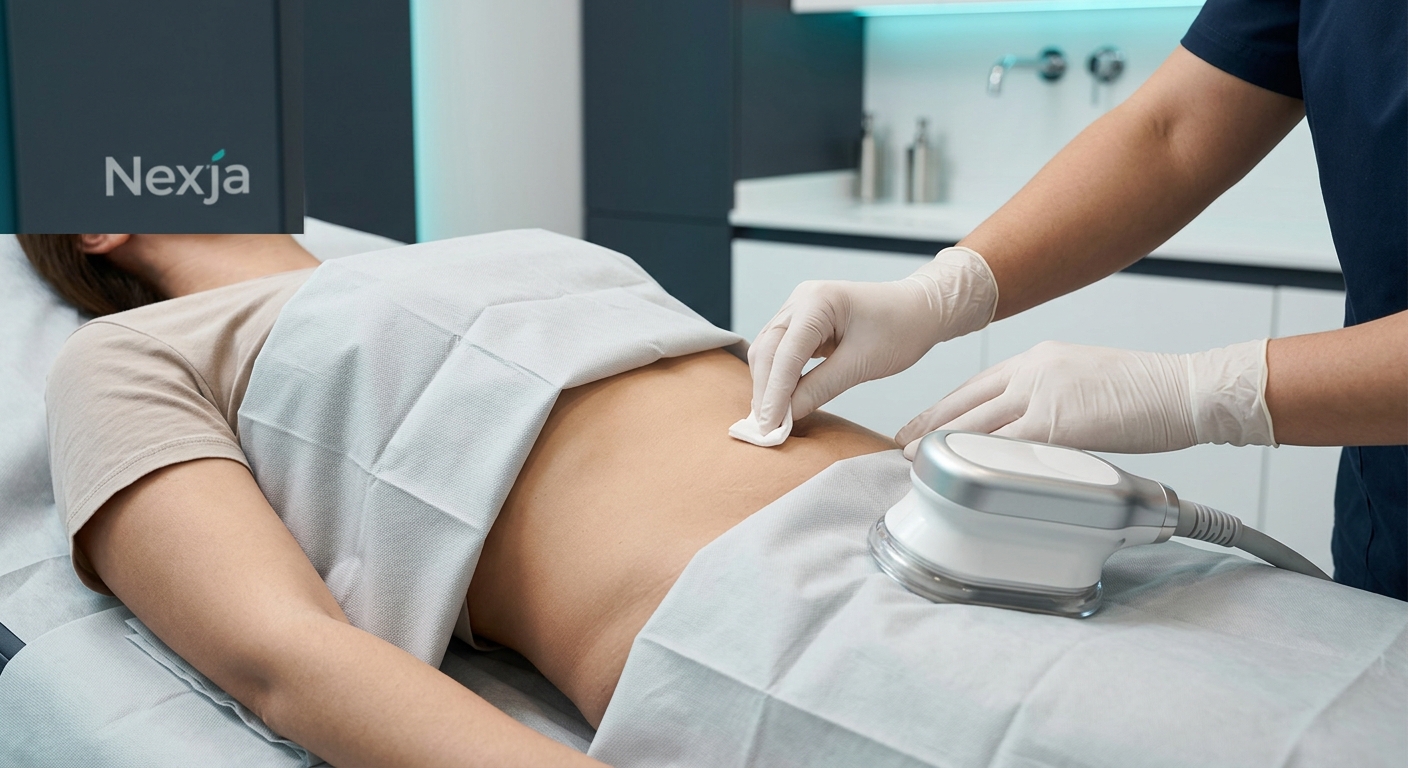
Non-surgical body contouring prices in Istanbul depend on the goal, the technology, the treatment area and the structure of the proposed course. Reducing a small fat bulge, stimulating a muscle, addressing mild skin laxity and improving the appearance of cellulite are different objectives. A useful quote should identify which objective you are paying for and explain how the selected treatment relates to it.
There is no meaningful single price for "body contouring" without those details. One offer may cover a short appointment for a limited area; another may include several technologies, repeated visits and review. Compare the complete plan, its realistic limitations and its follow-up arrangements before comparing the session fee.
For current options at Beauty Sila Premium, explore the body firming and contouring services and request a personalized consultation in Fatih. Confirm the exact device, treatment area, inclusions and appropriate assessment before purchasing. The technology categories discussed in this guide are educational comparisons, not a statement that every procedure is offered at this location.
Quick Answer: What Determines the Price?
The main cost factors are the concern being assessed, the size and boundaries of the area, the exact device and protocol, the number of applications or visits, the person performing the treatment and the support included afterward.
Before paying, obtain answers to five practical questions:
- What specific change is the treatment intended to produce?
- What area, device and procedure does the quote cover?
- Is the price for one application, one visit or an entire course?
- What additional costs or maintenance might reasonably be considered?
- When will the response be reviewed before more treatment is purchased?
A lower price is useful only when the treatment is appropriate and the offer is clear. A larger package is worthwhile only when its components have a purpose for your individual concern.
The most important distinction
Body contouring is not a general weight-loss plan. The American Academy of Dermatology describes non-invasive fat removal as an option for a small, persistent fat bulge, with changes that are generally subtler than those associated with liposuction. Assessment should establish whether the concern actually matches that type of intervention. AAD: Non-invasive fat removal.
If your main goal is substantial weight loss, begin with an appropriate health assessment. If your concern is shape, texture or firmness in a particular region, explain that specific concern when asking about cosmetic options. This distinction prevents a promising treatment name from taking the place of a suitable plan.
First Define the Goal: Fat, Muscle, Skin or Cellulite?
"Firming," "slimming," "sculpting" and "toning" are often used together in marketing. They can describe different things, and a reader should not have to guess which meaning applies to a quote.
A clearer starting point is to describe what you notice. Is there a local bulge? Does the skin look loose? Are you concerned about dimpling? Are you asking about muscle conditioning? More than one issue may be present, but each needs its own explanation.
| Your main concern | What the assessment should clarify | What a quote should specify |
|---|---|---|
| A small localized fat bulge | Whether the tissue and area are suitable for the proposed method | The fat-focused technology and precise treatment coverage |
| Muscle tone or conditioning | Whether a muscle-stimulation procedure fits the goal and health history | The actual stimulation technology, device and intended area |
| Mild skin laxity | Whether a non-surgical approach can offer a worthwhile improvement | The skin-focused method, limitations and review period |
| Cellulite or dimpling | Whether texture is the principal concern rather than volume | The proposed texture-focused approach and maintenance expectations |
| Significant weight change | Whether a weight-management assessment is needed | A health plan rather than an automatic cosmetic package |
| Several overlapping concerns | Which issue is the priority and what can reasonably be addressed | The separate purpose of each proposed component |
Localized fat reduction
For a localized concern, the first question is whether the proposed method is suitable for the tissue and body site. The location of a bulge alone does not establish that every fat-reduction technology can treat it.
Describe the region clearly: lower abdomen, flanks, outer thighs or another specific area. Explain whether your concern changes with posture, clothing or time of day. Those observations can help frame the conversation without requiring you to diagnose yourself.
The financial implication is straightforward: "abdomen" may mean a limited treatment zone or several applications covering a larger region. A price that sounds low may cover less than you expect.
Ask the provider to show you the proposed boundaries and explain whether symmetry, overlapping areas or separate regions change the estimate. A body map can be more useful than an attractive package name.
Muscle conditioning
Muscle-focused treatments should be discussed as muscle-focused treatments. Electrical stimulation and magnetic stimulation are not interchangeable labels, and a claim about one device cannot automatically be transferred to another.
The FDA’s consumer information on electrical muscle stimulators explains that stimulation may affect muscle tone or strength but does not, by itself, establish the advertised weight-loss or dramatic appearance claims. This guidance concerns electrical stimulators; it should not be used to pretend that every magnetic or combination platform is identical. FDA: Electronic muscle stimulators.
For purchasing purposes, ask what the device actually does and what outcome the quote is intended to support. A sensation of muscle contraction does not tell you the amount of fat change, if any.
The provider should explain whether muscle conditioning is the main objective or one component of a combined plan. If both fat and muscle benefits are claimed, request evidence for that exact platform and treatment configuration.
Skin firmness
Skin laxity is a different concern from a fat bulge. Removing or reducing volume is not the same thing as improving the appearance of loose skin.
The AAD describes non-invasive tightening as generally producing modest changes and notes that substantial sagging may not respond sufficiently. A suitable consultation should explain the difference between a modest cosmetic improvement and the effect of surgical skin removal. AAD: Options for sagging skin.
If loose skin is your main concern, make that explicit before discussing a fat-reduction package. Otherwise, you may compare prices for treatments that are addressing a different target.
It is reasonable to ask what the provider expects to remain visible after treatment. That question can reveal whether the proposed benefit is worth the cost and commitment to you.
Cellulite appearance
Cellulite is a texture concern, and it is not equivalent to excess body fat. The AAD notes that even very fit people can have cellulite and that a treatment which reduces fat may not improve dimpling. Evidence and durability vary across cellulite treatments. AAD: Cellulite treatment evidence.
A cellulite quote should therefore identify the intended texture change. "Slimming" is not a sufficient explanation if dimpling is what bothers you.
Ask whether the proposed benefit is expected to be temporary and whether ongoing treatment is part of the recommendation. This matters when comparing a single appointment with a maintenance-oriented service.
You do not need to treat cellulite simply because it exists. The decision is personal, and the value of treatment depends on whether its realistic benefit matters enough to you.
Why Two Body Contouring Quotes Can Be So Different
They may cover different units of treatment
A session is not a universal unit. One session can contain one application, several applications or different stages. Some providers price by region, some by applicator use and others by a series of appointments.
Imagine that two advertisements both say "one session for the abdomen." One may cover a small central zone, while the other may describe several placements. Without the area definition and procedure details, the prices cannot be compared fairly.
Ask for the unit used in the quote and the total number of those units proposed. If a device has several attachments, clarify whether simultaneous use changes the price or simply changes appointment logistics.
Do not divide the fee by minutes and assume that the cheapest minute offers the best value. Time is only one part of the service; suitability and treatment scope are more important.
Equipment identity matters
A technology category, a manufacturer, a model and a marketing nickname are different pieces of information. "EMS," "RF" or "fat freezing" does not identify a complete treatment.
At Beauty Sila Premium, the current device page lists EmslimFit and Vivaldi among its equipment names. The body-service menu also includes G9 and combination packages. Confirm the actual platform and procedure proposed for your appointment; a familiar name in a menu is not a substitute for that confirmation.
Ask for the manufacturer and model when the treatment relies on device-specific claims. A study involving another platform, attachment or body site may not establish the same result.
A clear device explanation should make your choice easier. It should not require you to decode a list of technical terms without understanding their relevance.
The operator and setting affect the service
Appropriate assessment, treatment-specific training, hygiene, documentation and access to follow-up all contribute to the work involved. The appointment fee may reflect those elements as well as the time using a device.
However, price alone does not verify competence. An expensive appointment needs the same clear explanation of qualifications, scope and support as a discounted one.
Ask who will assess you, who will perform the procedure and who will review a problem. These may be different people, and the responsibilities should be understandable.
For a medical concern or a procedure requiring medical expertise, establish the appropriate clinical route. A general beauty consultation and a medical assessment should not be presented as interchangeable.
A package may include different goals
A combined package can contain a muscle-focused component, a mechanical treatment and another procedure. The total number of appointments does not tell you whether all components are appropriate.
The key question is why each element belongs in your plan. A useful explanation links the component to an assessed concern, identifies its limitations and describes how its contribution will be reviewed.
Ask whether the package can be adapted if one element is unsuitable. If the answer is no, compare the package with a narrower plan that fits the goal more precisely.
A discount should reduce the cost of appropriate care. It should not make you feel obliged to buy treatments that do not have a clear purpose.
A Practical Framework for Comparing Prices
Use a written comparison rather than relying on memory after several conversations. Keep the same goal and treatment area in view while comparing the offers.
| Item to compare | What to request |
|---|---|
| Assessment | Who performs it, what it includes and whether it carries a separate fee |
| Goal | The specific concern and intended type of improvement |
| Coverage | The exact region, sides, boundaries and applications included |
| Technology | Manufacturer, model and procedure, where relevant |
| Course | Initial visits, review points and possible further treatment |
| Consumables | Any required single-use items, garment or treatment product |
| Optional additions | A separate explanation and price for each |
| Follow-up | Planned review, contact arrangements and handling of concerns |
| Payment terms | Deposit, cancellation, postponement, expiry and unused-session policy |
| Personal costs | Travel, time away from work and potential future maintenance |
The table is a purchasing aid, not a ranking system. A provider does not become the right choice merely by filling every box. The answers need to make sense together.
For example, a quote might identify a device clearly but offer no explanation of why it suits your concern. Another might describe an appealing result but leave the number of applications unspecified. Both require clarification before a meaningful price comparison can happen.
Keep the estimate and the treatment recommendation separate in your mind. You need to be comfortable with both.
Understanding the Main Treatment Categories
Cryolipolysis: a localized fat-focused approach
Cryolipolysis uses controlled cooling to target selected fat bulges. The American Society of Plastic Surgeons describes assessment of the bulge and selection of an appropriate applicator, with protective measures for the skin. This is a professional procedure, not an invitation to apply ice or a home freezing device. ASPS: Cryolipolysis.
The cost conversation should include the number of applications, their placement and the area they cover. One appointment may involve more than one application, so ask for both the appointment count and the application count.
A cooling procedure does not automatically address loose skin, muscle conditioning or cellulite. If those are also concerns, ask what the first treatment is expected to leave unchanged.
Do not assume that all fat-freezing machines are CoolSculpting. CoolSculpting is a specific brand; cryolipolysis is a broader category. The manufacturer’s own frequently asked questions describe its branded treatment and safety considerations. Those details cannot validate an unidentified machine or prove that the brand is used at a particular center.
Radiofrequency: clarify the target and the method
Radiofrequency systems use energy to heat tissue, but the term covers different devices and treatment purposes. The ASPS describes radiofrequency lipolysis as a fat-focused procedure. Skin-focused tightening uses of RF need a separate explanation, and external treatment should not be confused with methods involving needles or an instrument beneath the skin. ASPS: Radiofrequency lipolysis.
Ask whether the proposed treatment aims primarily at skin appearance, a local contour change or another defined outcome. "RF" alone does not answer that question.
The price should reflect the actual method and scope, not just the technology label. If a package combines RF with another component, ask which part of the intended benefit each component addresses.
Do not use treatment warmth as a personal measure of effectiveness. The appropriate operating parameters and monitoring belong to the trained professional and the device instructions.
Ultrasound: a category rather than one universal procedure
Ultrasound-based body treatments use sound energy, but different systems can have different intended effects and operating characteristics. A broad salon label such as "cavitation" does not identify a complete medical-device specification.
For a consumer, the useful next step is to ask for the exact platform, intended body sites and evidence supporting the proposed use. Avoid assuming that a claim about one ultrasound system applies to every device advertised with the same word.
The FDA’s overview includes ultrasound among body-contouring technologies and notes that burns and nerve injury are possible risks. Appropriate contact and use matter. FDA: Body-contouring technologies.
A quote should define the treated area and course, then explain why this method has been selected. It should not rely on a promise to remove an exact number of centimeters after one visit.
Magnetic muscle stimulation
Magnetic-field devices can trigger muscle contractions. The FDA describes muscle tone and firmness as potential objectives and notes that effects may require continued treatment to maintain. This is different from treating a fat bulge solely with cooling. FDA: Magnetic-field body treatments.
Before comparing a muscle-stimulation package, establish which device is proposed and whether it incorporates any additional technology. A combined platform may require a different discussion from a muscle-only system.
Names also matter. EMSCULPT and EmslimFit should not be treated as interchangeable because a menu, advertisement or conversation uses similar language. Ask for the exact manufacturer and model, and connect any performance claim to that device.
An appointment should be sold for a clearly described purpose. A count of contractions, even when supported for a device, is not a direct substitute for the wider health and functional benefits of an exercise program.
Mechanical massage, rolling and vibration
Mechanical body treatments can involve massage, rolling, suction or vibration. These methods should be distinguished from energy-based fat reduction and from muscle stimulation.
For endermologie, the AAD reports mixed study findings and describes any observed cellulite improvement as temporary. That evidence should not be transferred wholesale to every machine marketed as massage, LPG or G9. AAD: Cellulite treatments.
For a G9 or other mechanical-treatment quote, ask about the intended experience, area and course. If the provider claims fat-cell destruction, request specific evidence rather than assuming that a firm massage produces that effect.
Some people value the service experience itself, while others want a measurable cosmetic change. Clarify which expectation you are purchasing. A pleasant appointment and a lasting contour change are different reasons to book.
Creams, wraps and supporting products
A professional product can have a useful role in an appointment, but its purpose should be named. Is it used for contact with a device, massage glide, moisturization or home skin care? Those roles should not be confused with proof of significant fat reduction.
The AAD explains that skin-firming creams generally produce subtle effects at best and cannot provide the effect of lifting substantial sagging skin. A premium price or attractive packaging does not change that limitation. AAD: Firming creams and skin tightening.
Ask whether a product is required for the procedure, included in the fee or optional to purchase afterward. If a familiar cream already suits your ordinary care, ask whether there is a specific reason to replace it.
Avoid buying a large home-care bundle before understanding the treatment and aftercare plan. Good product selection should make the routine more purposeful, not simply more expensive.
What the Current Beauty Sila Premium Menu Can Tell You
The current body-service menu includes individual and multi-session options for G9 and Vivaldi, alongside muscle-treatment and combination-package listings. Examples of package names include Tokyo+, Swiss+, Bolivya+ and Istanbul+.
These names help you identify the offer when contacting the team, but they do not establish suitability. Request the current components and confirm whether the advertised session counts describe separate visits or components that may be scheduled together.
The body-service page is the place to check current listings. The device page provides additional names to clarify during consultation. Neither page should be treated as independent proof of a clinical outcome or regulatory authorization.
A useful booking conversation starts with your goal, then considers whether one of the listed services fits. Starting with the largest package and trying to make your concerns fit it reverses that order.
How to discuss a named combination package
Use the package name to open the conversation, then move to its actual contents. Ask which component addresses your main concern, which is optional and what would happen if assessment rules out one part.
Clarify the total number of appointments you will need to attend. A package described with several groups of sessions may require a different calendar from what you first imagined.
Also ask whether review is included before the entire course is completed. If the service is not meeting the agreed goal, there should be a way to discuss that while the plan is still in progress.
The aim is not to make the package complicated. It is to make it understandable enough that you can decide whether it suits your time, budget and expectations.
Areas, Coverage and the Meaning of "Full Body"
A full-body label can create unrealistic expectations because it sounds comprehensive. In practice, you still need to know which areas are included, what is appropriate for each and how the appointments are organized.
Do not assume that an abdomen price includes the flanks or that a thigh price includes both legs. Similarly, a whole-body package does not mean every concern is treated with the same technology.
Ask for a simple area list. If several regions are involved, identify your first priority and ask whether starting there would make the outcome easier to evaluate.
Abdomen and waist
The abdomen can be the focus of several different concerns: a localized bulge, loose skin, muscle-related goals or an issue requiring medical assessment. A photograph labeled "belly treatment" does not distinguish between them.
Explain what you want to change and mention previous abdominal surgery, pregnancy-related concerns, implants or a known hernia during assessment. Do not assume every change in abdominal shape is an appropriate cosmetic-device target.
For pricing, clarify whether the quote includes upper and lower areas, one side or both flanks, and whether separate applications are needed. The assessment should determine the scope before the final estimate is confirmed.
Thighs, hips and buttocks
Ask whether the priority is contour, skin appearance or dimpling. These areas are frequently grouped in promotional language even when the intended treatment goals differ.
A symmetrical plan may still involve different observations on each side. Ask how the area will be mapped and how the provider will explain any proposed difference in coverage.
For muscle-focused procedures, confirm the specific intended body site for the actual device. A treatment offered for one region should not be assumed suitable for every other region.
Upper arms and smaller regions
A small area is not automatically a simple area. The shape of the region, the type of concern and the available attachments can affect whether a treatment is appropriate.
If you are considering a smaller region, ask whether the device is intended for it and whether the likely benefit justifies the appointment. Do not assume the price should be calculated as a fraction of a larger body area.
A provider who recommends against treatment in a particular region may be giving you useful advice. Suitability is part of value, even when the answer is that another approach would be more appropriate.
Budgeting for the Course, Not Just the First Visit
A practical budget has three layers: the initial assessment and treatment stage, the planned review and any optional future maintenance. Keep these visible rather than combining them into one vague estimate.
For the initial stage, request an itemized figure and a clear description of what it includes. For later stages, ask whether the cost is definite or only a possible future option.
Maintenance should be discussed before purchase if it is central to preserving the intended effect. You can then decide whether the ongoing commitment fits your preferences.
Pay-per-visit versus a package
Pay-per-visit can offer flexibility while you learn about the experience and review the plan. A package can make sense when the course is appropriate and the terms are clear.
Compare the total commitment, not simply the discount. A lower price per appointment may require a large prepayment, a short expiry period or attendance that does not suit your schedule.
Read the postponement and cancellation terms. Ask what happens if treatment is delayed for health reasons, if a component becomes unsuitable or if you move away.
Do not assume that unused sessions can be refunded, transferred or exchanged. Those are specific terms to confirm before paying.
The hidden cost of an unclear goal
An unclear goal can lead to repeated spending because it is difficult to decide whether treatment has helped. If "better shape" is the only target, almost any additional service can sound relevant.
Make the goal more concrete: the particular area, the feature that concerns you and the kind of change you would consider worthwhile. Then agree on how and when the response will be reviewed.
This does not require a guaranteed measurement. It requires a shared understanding. Without that, even an accurately priced package can become an open-ended purchase.
Who May Be a Suitable Candidate?
Suitability depends on the individual and the exact treatment. A person with a clearly defined cosmetic concern, realistic expectations and enough time to complete the proposed care may be in a better position to evaluate an option than someone seeking an immediate whole-body transformation.
The assessment should establish whether the concern matches the method. It should also consider whether the likely degree of change would be meaningful to you. A technically plausible treatment can still be a poor purchase if its expected benefit is much smaller than your goal.
Stable priorities help. If you are planning substantial changes to your weight, schedule or health care, discuss those plans before committing to a course. The provider should explain whether it makes sense to proceed now or reassess later.
Suitability includes your ability to complete the plan
A treatment course can be inconvenient even when each appointment is relatively short. Consider travel, work, childcare and the availability of review appointments.
An Istanbul resident may prefer a plan that fits a regular weekly routine. An international visitor may need a different decision because later appointments cannot be assumed. An expat who travels frequently may need flexibility around both.
These are not minor details. A package that expires before you can reasonably attend its appointments may offer poor value even when the per-session price is attractive.
Discuss practical limitations honestly. The right plan should fit the person receiving it, rather than expecting the person to rearrange life around a predetermined bundle.
Suitability is not a promise of a particular result
Being considered suitable means a procedure may be reasonable to consider. It does not guarantee a specific reduction, degree of firmness or period of benefit.
Ask what a modest outcome would look like and what an unsatisfactory outcome would mean for the next decision. If only a dramatic transformation would justify the cost, say that before purchasing.
A good consultation gives space for this conversation. You should not need to appear enthusiastic or certain in order to receive a clear explanation.
It is also acceptable to decide that no treatment is the best choice for you at present. Cosmetic care is optional, and a decision to wait can be an informed outcome.
Who Should Seek Further Assessment or Postpone?
A health history is essential before device-based treatment. Tell the provider about medical conditions, medicines, supplements, implants, previous operations and current symptoms, even if they seem unrelated to the cosmetic concern.
Pregnancy and breastfeeding deserve explicit discussion. The ASPS advises against the nonsurgical fat-reduction procedures it describes during pregnancy or breastfeeding. This is a reason to postpone and obtain appropriate advice, not to select a different package without assessment. ASPS: Nonsurgical fat reduction.
Cold-related conditions matter for cooling treatments. ASPS identifies conditions such as cryoglobulinemia and cold urticaria as reasons not to undergo cryolipolysis. Mention any known reaction to cold before discussing that procedure. ASPS: Cryolipolysis candidacy.
For RF and magnetic devices, implanted electronic devices and metal can create important restrictions. The FDA specifically highlights these issues. Do not assume that an implant is irrelevant because it is not visible or not directly beneath the treatment area. FDA: Device-specific restrictions.
Information to disclose before treatment
Prepare a concise list that includes:
- Previous surgery, hernia, implanted devices or metal.
- Pregnancy, breastfeeding or recent major changes in health.
- Medicines and supplements, without stopping them independently.
- Unusual bruising, altered sensation or healing problems.
- Active skin irritation, wounds or a new rash in the proposed area.
- Known cold, pressure, heat or product sensitivities.
- Previous cosmetic procedures and any unwanted reactions.
- Pain, unexplained swelling or other symptoms needing medical review.
This is a disclosure checklist, not a complete contraindication list. The actual decision must follow the specific procedure and your assessment.
If the booking team cannot answer a clinical question, ask who will review it before treatment. Uncertainty should be resolved through the appropriate professional rather than an assumption that a routine package is safe.
Recent pregnancy, weight change and abdominal concerns
A concern after pregnancy or major weight change may involve more than a local fat bulge. Describe the changes and any symptoms, and ask whether a medical assessment is appropriate before cosmetic treatment.
Do not accept a device package as a diagnosis or as an automatic solution for a suspected hernia, muscle separation or unexplained abdominal change. The assessment should identify whether the proposed service belongs in the plan at all.
You can still request information about costs while clarifying suitability. The important point is to avoid treating a preliminary estimate as clearance to proceed.
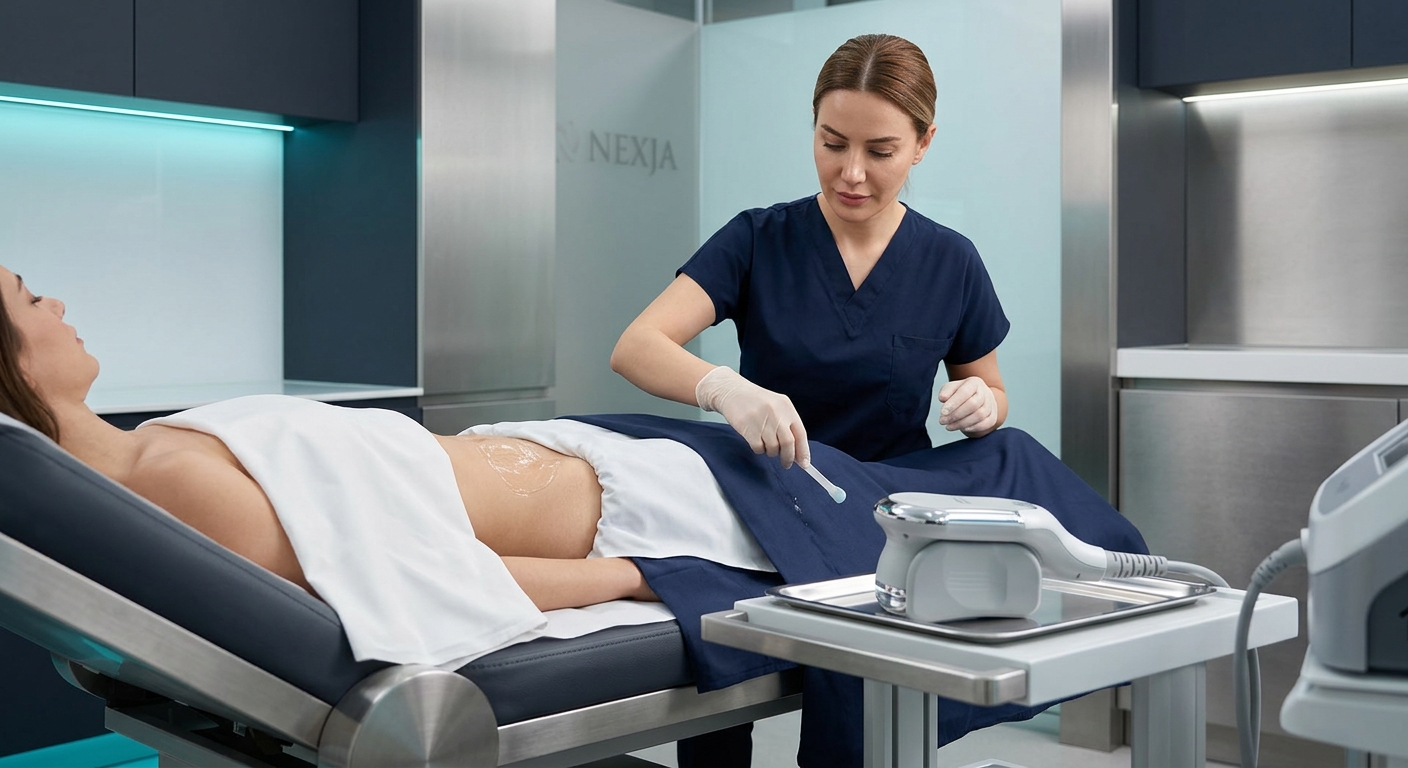
Risks and Limitations Should Be Part of the Price Conversation
Non-surgical does not mean risk-free. The FDA lists possible complications of body-contouring devices including discomfort, redness, swelling, bruising and nodules; some technology-specific complications can be serious or require intervention. The risks should be explained for the actual treatment, not dismissed with a general label. FDA: Body-contouring risks.
A quote should make the follow-up pathway clear. Know who will assess a concern, whether an in-person review is available and how an unexpected problem would be escalated.
This is particularly important for visitors who may leave Istanbul shortly afterward. A contact number alone is not the same thing as a practical plan for care.
A specific risk to discuss with fat freezing
Paradoxical adipose hyperplasia is an uncommon but important complication in which the treated area enlarges rather than reducing. The CoolSculpting manufacturer’s information explains that it can appear months later, does not resolve by itself and may require surgery. That information is specific to its branded treatment and does not supply a universal rate for every cooling device. CoolSculpting: Safety questions.
Ask how delayed changes would be assessed and what documentation you should keep. Do not assume that a problem appearing after your trip is too late to raise with the provider.
The limits of a non-surgical result
A non-surgical plan should not be sold as identical to liposuction or surgical skin removal. ASPS distinguishes these approaches and notes that nonsurgical fat reduction is not a replacement for liposuction. ASPS: Understanding nonsurgical fat reduction.
The relevant question is whether the expected smaller or different change is worthwhile to you. Some people prefer a less invasive approach and accept its limits. Others may decide that the likely benefit does not match their goal.
The consultation should support either decision. It should not redefine your expectations after the package has already been purchased.
What a Thorough Consultation Should Cover
Your own description of the concern
Begin with the part of your body that concerns you and the feature you hope to change. Avoid feeling that you must request a particular machine to sound informed.
Useful descriptions include "I am mainly concerned about dimpling on my thighs" or "I want to understand whether this small waist bulge is suitable for treatment." These are clearer than requesting every available slimming technology.
Explain any important event or travel date, but do not let that date become a demand for an unrealistic result. The consultation should test whether the timing is sensible.
Examination and treatment mapping
An appropriate assessment should define the proposed area and distinguish the relevant concerns. Ask to see the boundaries before the final quote is agreed.
If more than one method is proposed, request a map of which method is intended for which region. This helps prevent confusion about what a package actually covers.
You should also understand whether a recommendation is provisional and what further information is needed. An initial online exchange can help with planning, but it may not settle every suitability question.
Baseline records and consent
Ask how photographs and measurements will be used to review the response. Comparable lighting, posture, camera distance and measurement technique make a discussion more useful.
Consent for treatment and consent for promotional photographs are separate decisions. Clarify where images are stored, who can access them and whether you can decline marketing use.
Before treatment, review the expected benefit, limitations, alternatives, important risks and follow-up. Take time to ask questions. A signature should record an informed decision, not replace the conversation.
A written first-stage plan
A useful first-stage plan can be brief. It should state the concern, area, exact method, inclusions, proposed appointments and review point.
The plan should also explain what is not being treated. For example, a muscle-focused course should not leave you assuming that substantial skin laxity is included in the expected outcome.
Keep a copy of the estimate and the agreed plan. These records make later review easier and reduce reliance on memory.
What Happens During a Typical Visit?
The precise steps vary by device, but the experience should follow the agreed scope and appropriate operating instructions.
The provider should confirm any health changes, check the area and explain the planned procedure. If the recommendation changes, ask for the reason and any price difference before proceeding.
Preparation may include positioning, area marking, a treatment garment or an appropriate contact product, depending on the method. Those details should come from the actual procedure rather than a generic routine copied across devices.
During treatment, you should know how to communicate discomfort or request a pause. Do not assume that stronger sensation means a better result.
Before leaving, receive the aftercare instructions and the review arrangements. If several visits are proposed, understand whether the next booking is another treatment or an assessment of the response.
Comfort, privacy and communication
You should know which area needs to be exposed and how draping will be managed. Ask about privacy, changing arrangements and the language used for consent and aftercare.
For visitors, confirm that you can understand the treatment discussion directly or through an appropriate communication arrangement. Important clinical information should not be reduced to a few reassuring phrases.
Comfort also includes being able to decline an additional service. An optional product or treatment should remain optional unless there is a clearly explained reason that the agreed procedure cannot proceed without it.
Sessions, Timing and the Difference Between a Visit and a Result
The number of appointments should follow the selected method and assessment. A cooling application, a muscle-stimulation visit and a mechanical massage session should not be counted as interchangeable units of progress.
Ask for an initial estimate and the point at which it will be reviewed. Distinguish an expected course from a guaranteed prescription for everyone.
The AAD describes non-invasive fat-removal results as developing gradually, with the full effect of device treatment often assessed over months rather than immediately. Its general guide mentions three to six months after the last treatment, but the actual timeline depends on the procedure and person. AAD: What to expect from fat removal.
This matters when planning spending. An early review may assess comfort or recovery, while a later review considers the cosmetic response. Those are different purposes.
Why more frequent appointments are not automatically better
A busy calendar is not evidence of a better treatment plan. Ask why the proposed interval is appropriate for the exact device and goal.
If you are offered several technologies close together, request an explanation of the sequence. The provider should consider the combined plan, not simply place every available appointment into your calendar.
Do not shorten an interval because a package is about to expire or a flight is approaching. Financial terms and travel dates should be discussed early enough to avoid that pressure.
A course should include room for review and adjustment. If your response or health changes, the schedule may need to change as well.
How to review progress fairly
Choose a review method that matches the goal. Photographs may help discuss contour or visible texture; measurements can support a circumference discussion; your own experience matters too.
Keep the conditions as consistent as reasonably possible. A different pose, camera angle, clothing fit or tape position can make a comparison less useful.
Do not let one photograph or one measurement carry the entire decision. Ask the provider to explain the overall assessment and any uncertainty.
A review should answer whether the original concern has changed enough to matter to you and whether further treatment has a clear rationale. It should not automatically become a sales appointment for a new package.
When a course should be reconsidered
Reconsider the plan if the goal was unclear, the proposed method changes repeatedly without explanation or the response does not match what was discussed.
This does not mean every limited result proves poor practice. Cosmetic outcomes vary. It means that continued spending needs a fresh explanation.
Ask what has been learned, what the alternatives are and whether stopping is reasonable. You may prefer to pause, obtain another assessment or accept the current outcome rather than continue indefinitely.
Preparation: What to Arrange Before the Appointment
Request instructions for the exact procedure. Generic internet advice can be misleading when it treats cooling, heating, muscle stimulation and massage as the same service.
Confirm whether you need to change anything about skin products, clothing, food or activity beforehand. Do not stop prescribed medicines or undertake extreme dieting because an advertisement suggests it will improve a result.
Tell the provider about any new rash, illness, medication change or procedure since the consultation. A booking made earlier does not remove the need to report new information.
Practical preparation includes checking the appointment duration, travel arrangements and any immediate follow-up. Ask whether you should bring a garment or whether required items are supplied.
Prepare information, not just your schedule
Bring your relevant treatment history and the names of medicines and supplements. If you have previously had an unwanted reaction, describe what happened and when.
If you are switching providers, request the available records of earlier procedures. The new professional should not have to rely entirely on a vague description such as "a slimming machine."
Also bring your questions about the quote. It is easier to resolve an inclusion or payment question before the procedure begins.
Avoid last-minute experiments
Do not add unfamiliar home devices, strong topical products or aggressive massage to "prepare" the area without advice. The professional plan should account for what has actually been used.
Similarly, a dramatic pre-appointment change in eating or fluid intake can make the overall experience and progress discussion less straightforward. Ask for sensible, individualized instructions rather than trying to manufacture a better measurement.
The goal is to arrive with accurate information and skin that can be assessed, not to prove that you deserve a treatment or a particular result.
Aftercare: Different Treatments Need Different Instructions
Aftercare should explain expected changes, activity advice, product use, review and warning signs. It should match the actual procedure performed, including any combination used.
Ask for the instructions in a language you can comfortably understand. A verbal explanation can be useful, but a written copy is easier to follow after you leave.
Following a cooling treatment
Cooling-treatment recovery can include tenderness, bruising, swelling or altered sensation. The CoolSculpting manufacturer’s information notes that sensory changes can persist for weeks; its guidance should not be assumed to describe every other platform exactly. CoolSculpting: Recovery and safety information.
Ask what is expected for your device and how to report a change that concerns you. Do not improvise additional freezing, heat or forceful massage at home.
A delayed concern also deserves review. Keep the procedure record and contact details even after the initial recovery appears complete.
Following heat-based treatment
Ask the provider how to care for the treated skin and whether heat exposure, products or friction need to be limited. Advice can differ between external treatment and procedures that affect the skin more directly.
Report unusual or worsening symptoms rather than trying to treat a possible complication with a cosmetic cream. The provider should explain when an in-person assessment is needed.
Avoid borrowing an aftercare routine from a different procedure simply because both use the word "radiofrequency" or "laser." The actual method matters.
Following muscle stimulation
Ask about expected sensations and the appropriate return to your usual exercise routine. Do not judge the quality of a session by how sore you feel afterward.
If a treatment is described as muscle conditioning, it should still be considered alongside your normal health and fitness plan. It should not be used as a reason to ignore pain or abandon appropriate activity advice.
Make sure any unexpected symptoms can be discussed with a qualified professional, particularly if you have a medical condition or a previous injury.
Following mechanical body treatments
Clarify any product or activity advice and explain if you bruise easily or have reacted to pressure before. A more intense experience is not automatically a more useful one.
If the main aim is temporary improvement in appearance or a care experience, keep that goal in view when evaluating the course. Do not reinterpret temporary changes as proof of permanent fat reduction.
Ask when the provider expects to review your response and whether maintenance is optional or central to the intended benefit.
Know how to obtain help
Before treatment, ask which symptoms warrant a routine message, a prompt appointment or urgent medical care. Seek prompt assessment for severe or worsening pain, blistering, significant skin damage or other unexpected changes.
If you have urgent symptoms, do not wait for a social-media reply or a scheduled cosmetic review. Use the appropriate local medical service.
This practical contact plan should be available before payment and before the procedure, particularly when you are visiting from another country.
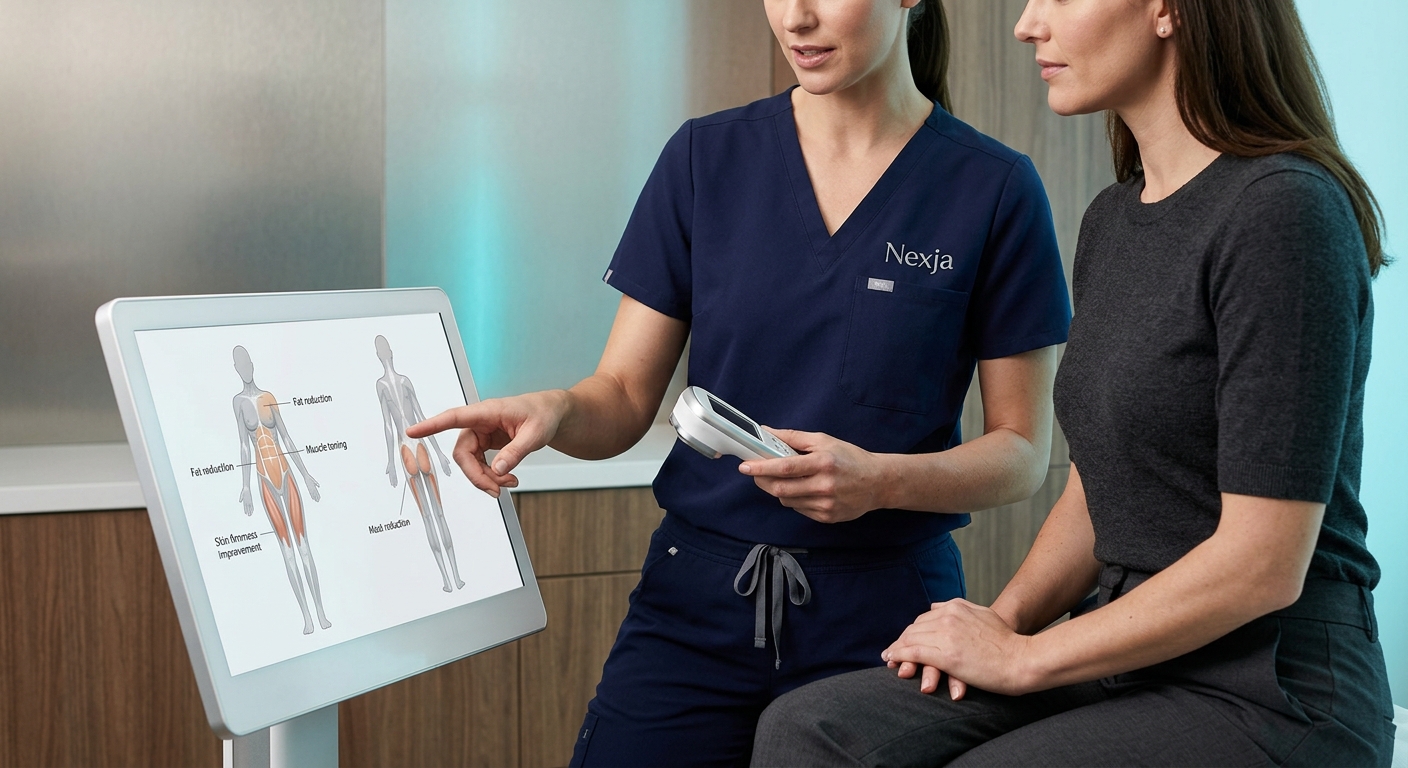
Comparing Options Without Mixing Up Their Goals
| Comparison | The useful distinction | The purchasing question |
|---|---|---|
| Fat reduction versus muscle stimulation | Different primary tissue targets | Which concern is the proposed device actually addressing? |
| Fat reduction versus skin tightening | Volume and skin appearance are separate goals | What happens if laxity is the main issue? |
| Mechanical treatment versus energy-based treatment | Different methods and evidence | What change is supported for this exact service? |
| Cellulite treatment versus slimming | Texture and size are not equivalent | Is the outcome relevant to the dimpling I notice? |
| One procedure versus a combination | More components need separate justification | What does each addition contribute? |
| Non-surgical care versus surgery | Different magnitude, process and recovery | Does the likely non-surgical benefit match my expectations? |
| A single visit versus a course | Different commitments and review opportunities | What must be assessed before further treatment? |
A focused plan can be easier to evaluate
A plan with a clear first priority lets you assess whether the initial choice was useful. This can be preferable to buying several treatments at once without knowing which concern each addresses.
That does not mean combination care is always unnecessary. It means the explanation should come before the bundle.
If the provider proposes several components, ask whether they must be performed together or whether staged decisions are reasonable. A staged approach may offer more financial clarity, depending on the treatment.
Illustrative decision: dimpling rather than size
Imagine someone who is comfortable with their body size but dislikes visible thigh dimpling. A package sold mainly for fat reduction may not match that priority.
The appropriate consultation would first examine the texture concern and explain relevant options, uncertainty and maintenance. The financial comparison would then focus on those options rather than the largest slimming discount.
This example is a decision scenario, not a patient story or outcome claim. Its purpose is to show why the description of the concern changes the price comparison.
Illustrative decision: a visitor with limited time
Consider a visitor who can attend one appointment during an Istanbul trip. A multi-visit offer may look inexpensive per session but be difficult to complete.
The useful conversation concerns what can responsibly be assessed or started during the visit, what follow-up is needed and whether treatment should wait. A consultation-only visit may still provide valuable information.
The same reasoning applies to residents with limited availability. A plan is not good value if the calendar makes it impractical.
Istanbul Planning: Residents, Expats and International Visitors
Beauty Sila Premium’s contact address is in Aksemsettin on Fevzi Pasa Caddesi, Fatih. Use the contact page for current location and appointment details.
When comparing providers across Istanbul, consider the whole course of travel rather than only the first visit. Repeated journeys, work disruption and appointment availability can affect the real cost.
Sightseeing, hammam and exercise
Tell the provider about planned outdoor walking, a Bosphorus outing, a hammam visit or an intensive exercise session. Ask whether any of those activities conflict with the procedure-specific instructions.
Do not assume that a non-surgical appointment can always be placed between two demanding holiday activities. Equally, do not assume that every procedure requires the same restrictions.
An accurate answer depends on the treatment you actually receive. Give the provider a practical description of your plans so the advice can be relevant.
Flying and leaving Turkey
There is no single flight rule for every treatment described as body contouring. Ask whether your proposed departure allows appropriate care and review.
Before leaving Turkey, obtain a record of the treatment, relevant device details and the aftercare instructions. Confirm the contact route and the limits of remote review.
If further care is likely to take place elsewhere, ask what information the next clinician will need. A later provider must make an independent assessment rather than simply continue an unfamiliar package.
Weddings and other fixed dates
Discuss important dates at the consultation. Ask whether the likely response timeline and possible temporary effects fit the event.
Avoid buying a guarantee that you will reach a particular measurement or appearance by a deadline. A realistic plan should leave room for uncertainty.
If the event is close, the best decision may be to postpone treatment. The value of an assessment includes knowing when the timing is unsuitable.
Provider Selection: What Makes the Plan Worth Considering?
A worthwhile consultation connects the concern, the treatment and the price. The explanation should remain clear after you leave the appointment.
Look for a provider who can discuss limitations without becoming defensive, identify the device or product and explain the qualifications relevant to the actual procedure. A broad claim of experience does not replace treatment-specific training.
Ask how progress is reviewed and how concerns are handled. These questions matter just as much as the room design or the number of technologies on the menu.
Where the Nexja approach fits
The Nexja Experience is relevant here as a care sequence: consultation, assessment, personalized planning, treatment and aftercare. For a body-treatment decision, each stage should help answer a practical question rather than serve as a slogan.
At consultation, establish the priority. During assessment, confirm whether the concern fits the proposed method. In planning, clarify the scope and cost. During treatment, follow the agreed procedure. Afterward, know how to obtain advice and review.
Selected technologies and professional products can support that process when their role is clear. Their presence alone does not guarantee a result, and every combination still needs individual justification.
Use the current service information to begin the conversation, then request the details that apply to you.
Red flags before you commit
Pause if the offer promises the same result for everyone, guarantees a particular weight or centimeter loss, or treats all technologies as equivalent.
Other concerns include an unidentified device, no health-history discussion, unclear package coverage, pressure to prepay before assessment or no practical follow-up route.
Be cautious if a provider refuses to discuss alternatives or presents every extra product as essential without explaining why. A clear recommendation should survive reasonable questions.
If you feel rushed, ask for the plan and estimate in writing. Taking time to decide is compatible with responsible cosmetic care.
Myths and Facts About Body Contouring
Myth: A body-contouring package is a weight-loss program.
A cosmetic plan should have a defined local goal. Substantial weight-management needs deserve a separate health assessment.
Myth: Muscle stimulation, fat reduction and skin tightening are the same service.
They describe different targets. Confirm what the selected device is intended to address.
Myth: A bigger package always offers better value.
Only useful components add value. More appointments can increase commitment without clarifying the benefit.
Myth: Non-surgical means there are no meaningful risks.
Risks depend on the technology and individual. The consent discussion should cover the exact procedure.
Myth: A dramatic advertisement predicts my outcome.
Promotional images do not replace an assessment or establish a personal result.
Myth: The strongest sensation means the treatment is working best.
Comfort and appropriate operation should be discussed with the professional; intensity is not a consumer score of effectiveness.
Myth: One immediate measurement proves lasting fat reduction.
Progress should be reviewed through a consistent method and an appropriate timeline, with the intended goal clearly defined.
Frequently Asked Questions
1. How much does non-surgical body contouring cost in Istanbul?
The cost depends on the goal, area, device, number of applications or visits and follow-up. Ask for a personalized estimate that separates the initial stage from optional additions and possible maintenance. Beauty Sila Premium’s contact page is the starting point for current pricing and appointment information. A citywide headline price cannot describe every treatment plan.
2. Why is one provider much cheaper than another?
The offers may cover different areas, devices, application counts or services. One price may describe a single visit while another covers a course. Compare the same concern and scope, then review qualifications and follow-up. A difference in price is not meaningful until you know what each provider is proposing and why it fits your goal.
3. Is body contouring suitable for losing a lot of weight?
A cosmetic contouring package should not be treated as a substitute for weight-management care. Explain your overall goal before booking and seek an appropriate health assessment when weight loss is the priority. A local appearance concern and a broader health objective require different planning; the treatment name should not obscure that distinction.
4. Can one treatment address fat, cellulite and loose skin?
Do not assume so. Ask which of those concerns the exact device is intended to address and what evidence supports each claim. A combined plan may involve different components, but every component needs a purpose. If only one concern matters to you, compare a focused option before purchasing a package aimed at several goals.
5. Is fat freezing the same as CoolSculpting?
No. Fat freezing describes cryolipolysis as a category; CoolSculpting is a specific brand. Ask for the actual manufacturer and model proposed for your appointment. Do not use the reputation or documentation of one brand to validate another machine, and do not assume a center uses a brand merely because it appears in an educational comparison.
6. Are EMSCULPT and EmslimFit the same device?
Do not assume they are. Confirm the exact manufacturer, model and technology used for your appointment. Similar names or inconsistent menu wording are not enough to establish equivalence. Any claim about benefits, treatment areas or safety should relate to the actual platform, rather than being borrowed from a different branded system.
7. What is the difference between electrical and magnetic muscle stimulation?
They are different ways of producing muscle stimulation and require device-specific explanations. Ask which technology is being offered and what its intended purpose is. Avoid treating every product labeled EMS as interchangeable. FDA information on electrical stimulators cautions against unsupported appearance and weight-loss claims. FDA: Electrical muscle stimulators.
8. Can muscle stimulation replace exercise?
It should not be presented as a complete replacement for an appropriate exercise routine. Ask what limited objective the device is intended to support and how that fits your wider plan. A treatment-related contraction is not a complete measure of fitness, function or health. Discuss medical or rehabilitation goals with an appropriately qualified professional.
9. Will fat reduction remove cellulite?
Not necessarily. Cellulite concerns visible texture, and reducing a fat bulge may not address it. Ask for an assessment focused on the dimpling if that is your main priority. The AAD explicitly distinguishes cellulite from fat and discusses the different evidence for available approaches. AAD: Cellulite options.
10. Can non-surgical treatments remove a large amount of loose skin?
Do not expect them to reproduce surgical skin removal. The AAD describes non-invasive tightening as offering modest improvement and notes that substantial sagging may not be helped sufficiently. Ask whether the expected change is worth the cost for your degree of laxity, and consider a medical assessment of alternatives. AAD: Skin-tightening limitations.
11. How many sessions should I buy?
Buy according to an assessed plan, not a universal package count. Request an initial course estimate, the reason for the interval and a review point before further treatment is assumed. Ask whether package sessions are separate visits or different components. The appropriate financial commitment should follow the treatment recommendation rather than determine it.
12. How soon should I expect a visible change?
The timeline depends on the treatment and goal. Some effects are evaluated over weeks or months, while a temporary appearance change may have a different meaning. Ask when your specific response should be reviewed. The AAD describes non-invasive fat-removal changes as gradual rather than immediate. AAD: Fat-removal expectations.
13. Are results permanent?
Avoid a blanket permanence claim. Different methods target different concerns, and maintenance expectations vary. Ask what is expected to persist, what may change and how future weight or lifestyle changes affect the overall plan. A permanent-sounding advertisement is not a personal guarantee, and the duration of one treatment’s effect cannot be applied to every contouring service.
14. Is the abdomen one treatment area?
Only if the provider defines it that way. A quote may cover a small zone or several applications across different regions. Ask whether upper and lower abdomen or the flanks are separate, and request the proposed boundaries before paying. This makes comparisons clearer and reduces the risk of unexpected additions at the appointment.
15. Does a thigh price include both legs?
Not automatically. Confirm whether the price is per side, per region or for both thighs, and whether inner and outer areas are separate. Also clarify the goal: contour and cellulite appearance may require different discussions. A written area description is more useful than assuming that all providers use the same definition.
16. Is a full-body package the best deal?
Only if its included areas and treatments are appropriate and useful to you. Ask which components address your priorities and whether a smaller plan would be easier to complete and assess. A large discount can still represent unnecessary spending if much of the package does not match your concern or availability.
17. Can I choose a treatment from photographs alone?
Photographs can support an initial conversation, but they may not establish the full concern or suitability. Ask which parts of the recommendation remain provisional until assessment. If you are traveling, clarify deposits and cancellation terms in case the in-person recommendation differs. Do not treat an online estimate as a complete clinical evaluation.
18. Can I have treatment while pregnant or breastfeeding?
Discuss postponement and appropriate medical advice rather than booking routinely. The ASPS advises against the nonsurgical fat-reduction procedures it describes during pregnancy or breastfeeding. Tell the provider before an appointment is confirmed, and do not assume a different marketing name removes the issue. ASPS: Suitability considerations.
19. What if I have a pacemaker, metal implant or previous surgery?
Disclose it before treatment selection. The exact device, treatment site and health history need professional review. Do not rely on a general reassurance that an implant is far from the area. Ask who will assess the information and whether documentation or advice from your treating clinician is needed before proceeding.
20. Are there special concerns with cold sensitivity?
Yes, known cold-related conditions must be discussed before cryolipolysis. The ASPS identifies several cold-related conditions as contraindications. Tell the assessing professional about diagnosed conditions and unusual cold reactions rather than attempting to test suitability yourself. A non-cooling alternative still requires its own assessment. ASPS: Cryolipolysis restrictions.
21. What is paradoxical adipose hyperplasia?
It is an uncommon complication associated with fat freezing in which the treated area enlarges rather than reduces. It needs professional assessment and can require corrective treatment. Ask how delayed concerns are handled and keep your procedure records. Do not assume an unexplained persistent enlargement is simply routine swelling. CoolSculpting: Safety information.
22. Does body contouring hurt?
The experience varies with the method and person. Ask what sensations are expected for the exact procedure and how to signal discomfort. Do not accept severe pain as proof of effectiveness. You should understand how the treatment can be paused and who will assess an unexpected reaction during or after the appointment.
23. Will I need time off work?
That depends on the procedure, your response and your work. Explain whether you work physically, in heat, outdoors or in clothing that presses against the area. Ask about practical restrictions rather than accepting a universal "no downtime" statement. Leave flexibility when planning a first treatment, especially before an important work commitment.
24. Can I go to the gym or a hammam afterward?
Ask separately about exercise, heat, water and massage-related friction. The answer depends on the procedure and its aftercare instructions. A hammam is not equivalent to an ordinary shower, and feeling comfortable does not settle every activity question. Give the provider your actual plans before treatment so the guidance can be specific.
25. Should I drink extra water to flush out fat?
Do not treat a special fluid routine as proof of fat reduction or a substitute for the actual treatment plan. Follow appropriate individualized advice, particularly if a clinician has given you fluid restrictions. Ask the provider to explain any aftercare recommendation and avoid unsupported detox promises attached to products or packages.
26. Do I need a special cream or garment?
Only the actual procedure and assessment can establish that. Ask whether an item is required, included or optional, and what purpose it serves. Do not assume an expensive cream is necessary because it is displayed beside a device. Obtain the aftercare plan before purchasing additional products or garments.
27. Can I complete a course during a short Istanbul trip?
Possibly not. Ask how many visits and reviews the plan requires and whether the interval fits your stay. Do not compress a course merely to use a package before departure. A consultation or a carefully considered first stage may be more practical than a commitment you cannot complete.
28. When can I fly home?
There is no single rule for every body-contouring procedure. Give the provider your departure date and ask whether review or care is needed beforehand. Obtain written instructions and a contact plan for after departure. If the proposed schedule leaves no room for appropriate follow-up, reconsider the timing before paying.
29. What if I do not see the improvement I expected?
Request a review of the original goal, treatment details and assessment timeline. Ask what has been learned before purchasing more treatment. Limited response should not automatically lead to a larger package. An independent professional opinion may be useful if the explanation remains unclear or the next recommendation represents a substantial change.
30. What should I ask Beauty Sila Premium before booking?
Describe the area and your main concern, then ask which assessment is appropriate. Confirm the actual device, proposed scope, inclusions, course structure and review arrangements. Mention health information relevant to suitability through an appropriate contact method. Request current pricing tied to the proposed plan rather than asking only for the cheapest available package.
Choose a Clear Plan Before Choosing a Price
The most useful non-surgical body contouring price is attached to a plan you understand. It identifies the concern, explains the method and makes the commitment visible: appointments, possible recovery, review and any ongoing care.
Before paying, you should be able to describe what the treatment is intended to change and what it is not expected to change. You should also know who will perform it, how progress will be reviewed and how concerns will be handled.
For residents, expats and visitors comparing options in Istanbul, begin with Beauty Sila Premium’s body firming and contouring services. Then contact the team in Fatih to discuss your goals, confirm an appropriate assessment and request a personalized estimate.
A suitable decision balances your priorities with realistic benefits, limitations and practical commitments. Clear information gives you the freedom to proceed, choose a narrower plan or wait until the timing is right.